
Introduction
LinkedIn has evolved into much more than a professional networking platform. Today, it is a powerful channel for B2B marketing, lead generation, brand awareness, and customer acquisition. Businesses use LinkedIn to connect with decision-makers, demonstrate industry expertise, build professional relationships, and guide potential customers toward purchasing decisions. However, achieving consistent results requires more than publishing occasional updates or sharing promotional content. Businesses need a structured LinkedIn content strategy that addresses every stage of the buyer’s journey.
The full-funnel LinkedIn playbook provides a systematic approach to creating content for potential customers, from their first interaction with a brand to the final purchasing decision and beyond. By aligning content with buyer intent, businesses can attract the right audience, nurture meaningful relationships, generate qualified leads, and improve marketing performance. For companies investing in digital marketing and B2B growth, understanding how to use LinkedIn throughout the sales funnel is essential for building a sustainable pipeline.
Understanding the LinkedIn Marketing Funnel
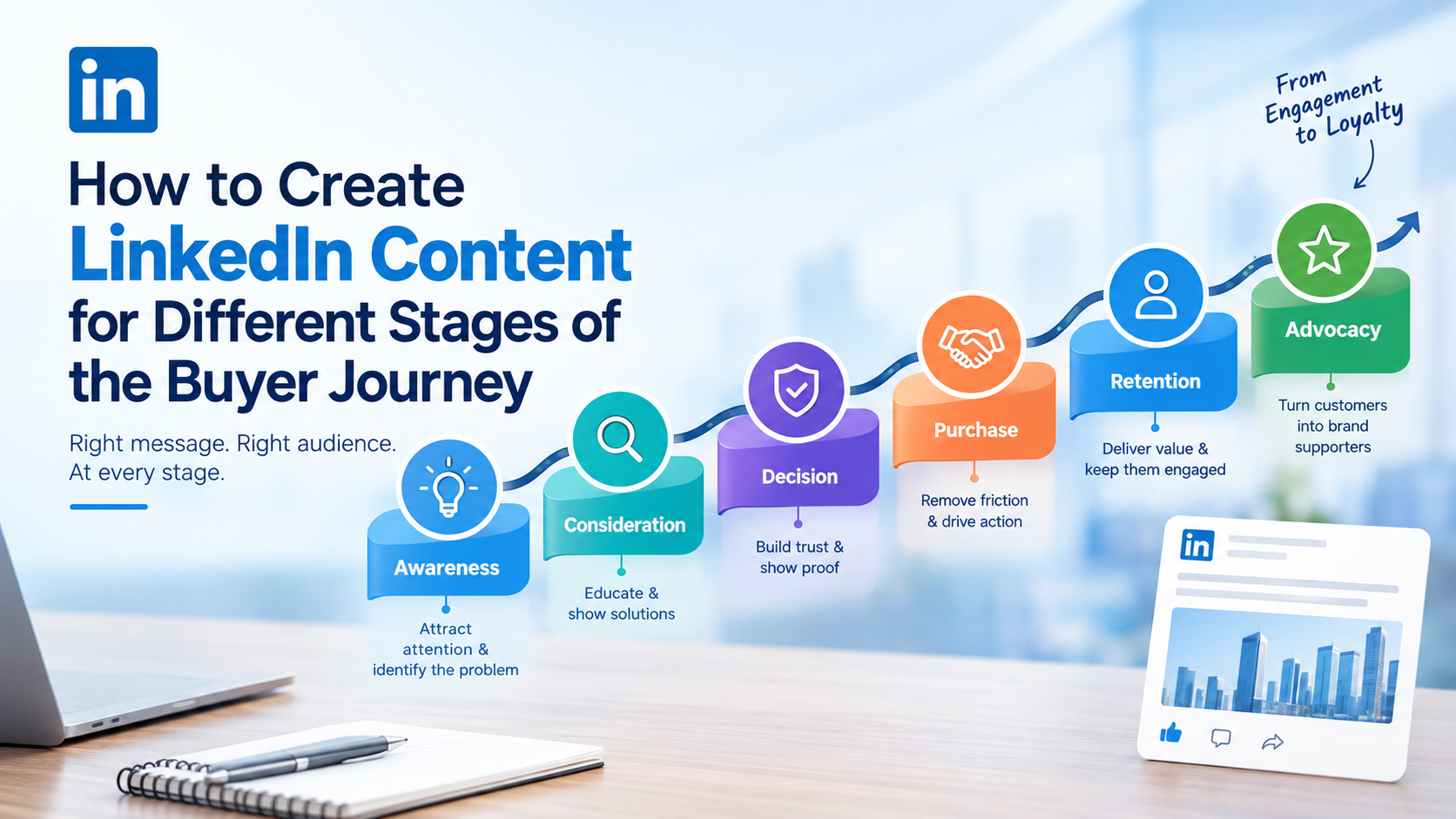
The LinkedIn marketing funnel represents the different stages a potential customer moves through before choosing a product or service. Although the buyer’s journey can vary depending on the industry, business size, and purchasing complexity, it generally includes three major stages: awareness, consideration, and decision. Some marketing strategies also include retention and advocacy as additional stages that focus on existing customers.
Each stage requires a different type of content because buyers have different questions, expectations, and levels of purchase intent. Someone discovering a business for the first time may want educational information about an industry challenge, while someone comparing solutions may be looking for case studies, product demonstrations, or detailed comparisons. A buyer who is ready to make a decision may need pricing information, implementation details, customer testimonials, or a consultation.
An effective full-funnel LinkedIn strategy recognizes these differences and delivers relevant information at the right time. Rather than pushing every visitor toward an immediate sale, businesses can establish trust gradually and help prospects make informed decisions.
Awareness Stage: Attracting the Right Audience
The awareness stage is the beginning of the buyer’s journey. At this point, potential customers may recognize a business problem without knowing exactly how to solve it. They might not be familiar with a particular brand or understand the solutions available in the market. The primary goal of LinkedIn content at this stage is to attract attention, introduce relevant problems, and establish credibility.
Educational posts are particularly useful for building awareness. Businesses can publish industry insights, explain common challenges, share professional experiences, discuss emerging trends, and offer practical advice. For example, a software development company such as Devobyte can publish content explaining how outdated business systems affect productivity, why digital transformation matters, or how custom software can help organizations improve operational efficiency.
LinkedIn carousels, short-form videos, infographics, text-based posts, and thought leadership articles can all support awareness campaigns. A carousel explaining five common mistakes businesses make when selecting software may attract decision-makers who are researching operational improvements. Similarly, a post discussing the business impact of poor website performance can reach companies that have not yet considered investing in technical optimization.
At this stage, content should focus on providing value rather than aggressively promoting services. Clear explanations, relatable examples, and actionable recommendations encourage users to engage with the brand. Relevant keywords, industry-specific terminology, and meaningful hashtags can also improve content discoverability, although strong messaging and audience relevance remain essential.
The objective is to make potential customers recognize the brand as a credible source of information. When businesses consistently publish helpful LinkedIn content, they can build familiarity and create opportunities for future engagement.
Consideration Stage: Building Trust and Demonstrating Expertise
Once potential customers understand their challenges, they begin exploring possible solutions. This is the consideration stage, where buyers evaluate different approaches, compare providers, and seek evidence that a particular solution can address their needs. LinkedIn content should now move beyond general education and provide deeper insights into how specific solutions work.
Businesses can use detailed guides, expert opinions, industry reports, webinars, case studies, comparison posts, and practical implementation frameworks to support buyers during this stage. Instead of simply explaining why digital transformation is important, a software development company could publish a guide outlining how organizations can evaluate their existing technology infrastructure before investing in new software.
Case studies are especially valuable because they demonstrate how a business approaches real-world challenges. A well-structured case study explains the initial problem, the solution implemented, the process followed, and the measurable outcomes when reliable data is available. This helps potential customers understand how a provider's expertise could apply to their own circumstances.
LinkedIn newsletters and long-form articles can also help brands explore complex topics in greater detail. For example, Devobyte could publish a LinkedIn article about choosing between custom software and off-the-shelf solutions, explaining the advantages, limitations, costs, and suitability of each approach. This type of content helps decision-makers evaluate their options without feeling pressured to purchase immediately.
Webinars and live discussions provide additional opportunities to engage interested audiences. Businesses can invite subject-matter experts to discuss common industry challenges, demonstrate useful workflows, or answer questions about technology adoption. These activities allow prospects to learn directly from professionals and develop greater confidence in the company’s expertise.
The main objective of consideration-stage content is to establish trust, answer important questions, and position the business as a relevant potential solution. Every piece of content should help buyers make progress in their research and understand what differentiates the company from other providers.
Decision Stage: Converting Interested Prospects into Customers
The decision stage is where potential customers narrow down their options and prepare to make a purchase. They may already understand their requirements and have shortlisted several service providers. At this point, they need specific information that reduces uncertainty and helps them determine whether a business is the right fit.
LinkedIn content for the decision stage should emphasize proof, clarity, and direct next steps. Customer testimonials, detailed case studies, product demonstrations, service explainers, consultation offers, and implementation guides can help prospects evaluate a provider's capabilities. Businesses should also address common purchasing concerns, such as project timelines, integration requirements, ongoing support, scalability, and expected costs.
For a software development company, decision-stage content could include a demonstration of a business application, an explanation of its software development process, or a detailed overview of how projects move from discovery and planning to deployment and maintenance. This type of information helps prospective clients understand what working with the company involves.
Customer success stories can further strengthen credibility, provided that the claims and results are accurate and supported by evidence. Prospective buyers often want to understand not only what a provider offers but also how the provider manages challenges, communicates during projects, and measures success.
Calls to action should also become more direct at this stage. Businesses can invite prospects to book a consultation, request a project assessment, schedule a product demonstration, or discuss their specific requirements. The action should match the service being offered and the buyer's level of readiness.
However, conversion-focused content should not rely on exaggerated promises or artificial urgency. Transparent communication about capabilities, limitations, and the next steps creates a stronger foundation for long-term business relationships. The goal is to make the purchasing decision easier by giving prospects the information and confidence they need.
Retention and Advocacy: Turning Customers into Long-Term Supporters
A successful LinkedIn content strategy does not end when a prospect becomes a customer. Existing customers can become valuable sources of repeat business, referrals, testimonials, and brand advocacy. Retention and advocacy therefore deserve a place in the full-funnel LinkedIn playbook.
Businesses can maintain relationships with customers by sharing product updates, practical usage tips, industry developments, advanced guides, and information about new services. Content that helps customers gain greater value from an existing solution can strengthen engagement and demonstrate an ongoing commitment to their success.
For example, a software company could publish articles explaining how businesses can improve software adoption, maintain application performance, strengthen cybersecurity practices, or prepare their systems for future growth. These resources can help existing clients make better decisions while reinforcing the company's expertise.
Customer appreciation posts, employee spotlights, project milestones, and customer success stories can also support advocacy when shared with appropriate permission. Encouraging satisfied customers to provide honest feedback or participate in industry discussions can increase brand visibility and strengthen professional relationships.
The objective is to move beyond one-time transactions and develop lasting partnerships. By consistently supporting customers after the sale, businesses can create more opportunities for customer loyalty, referrals, and sustainable growth.
Creating a Balanced LinkedIn Content Strategy
One of the most common mistakes in LinkedIn marketing is publishing content that focuses exclusively on one stage of the buyer’s journey. A company that only shares educational posts may attract attention without generating enough sales conversations. In contrast, a company that publishes only promotional messages may struggle to build trust with people who are unfamiliar with its services.
A balanced LinkedIn content strategy combines awareness, consideration, decision, and retention content. The precise distribution should depend on the target audience, sales cycle, business objectives, and available resources. For example, a business trying to establish its brand in a new market may prioritize educational and thought leadership content, while a company with an established audience may place greater emphasis on case studies, demonstrations, and consultation offers.
Consistency is more important than publishing large volumes of content without a clear purpose. Businesses can begin with a manageable schedule, such as three posts per week, and assign each post a specific objective. One post could educate the audience about a common problem, another could demonstrate expertise through a practical guide, and a third could present a relevant case study or invite prospects to take the next step.
Content formats should also be selected according to the message. Text posts work well for sharing opinions, professional experiences, and concise insights. Carousels can break down complex subjects into easy-to-follow steps. Videos and demonstrations can explain processes visually, while longer articles and newsletters can explore detailed topics. The most effective format is the one that communicates the message clearly and suits the audience's preferences.
Businesses should also maintain a recognizable brand voice across their LinkedIn content. Clear language, consistent messaging, relevant examples, and a focus on customer challenges make a company easier to understand and remember.
Using LinkedIn Analytics to Improve Funnel Performance
Publishing content is only one part of an effective LinkedIn marketing strategy. Businesses also need to measure performance to understand which topics attract attention, which resources encourage deeper engagement, and which activities contribute to lead generation.
At the awareness stage, useful indicators include impressions, reach where available, follower growth, profile visits, and relevant audience engagement. These metrics help businesses understand whether their content is reaching the intended audience. High impressions alone, however, do not necessarily indicate that a campaign is attracting qualified prospects.
At the consideration stage, businesses can examine meaningful comments, saves, shares, newsletter subscriptions, webinar registrations, and visits to relevant website pages. These actions can indicate that users are investing more time in understanding a company's expertise and potential solutions.
Decision-stage performance requires a stronger focus on business outcomes. Consultation requests, qualified leads, booked meetings, proposal requests, conversion rates, and revenue influenced by marketing activities can help organizations assess whether their LinkedIn strategy contributes to sales objectives. Where possible, businesses should use consistent campaign tracking and CRM records to understand how LinkedIn interactions relate to later conversions.
Retention performance can be evaluated through customer engagement, referrals, repeat business, feedback, and participation in customer-focused activities. No single metric tells the complete story, so companies should assess multiple indicators together.
Regular performance reviews allow marketing teams to identify successful topics, improve underperforming content, and refine calls to action. If educational posts generate strong engagement but few qualified leads, the business may need better connections between its awareness content and deeper resources. If prospects engage with case studies but rarely request consultations, clearer service information or a more relevant next step may help.
The purpose of analytics is not simply to increase numbers. It is to understand audience behavior and improve the effectiveness of the entire buyer journey.
Integrating LinkedIn Content with SEO and Digital Marketing
LinkedIn performs best when it supports a broader digital marketing strategy rather than operating in isolation. Businesses can connect LinkedIn content with their websites, blogs, landing pages, email marketing campaigns, and customer relationship management systems to create a more consistent experience for potential buyers.
For example, a company can publish a LinkedIn post introducing an industry problem and direct interested readers to a detailed blog article. That article can offer a downloadable guide, invite readers to register for a webinar, or explain the available services. Prospects who later request a consultation can then enter an appropriate sales follow-up process.
This approach also creates opportunities to repurpose existing content. A comprehensive blog post can become several LinkedIn text posts, a carousel, a short video script, or a newsletter topic. Repurposing content helps businesses maintain consistency while adapting information to different formats and audience needs.
Search engine optimization remains important for the website resources supporting these campaigns. Articles should have clear headings, relevant keywords, useful explanations, and compelling meta descriptions. For a company such as Devobyte, topics related to custom software development, digital transformation, web development, application performance, and business technology solutions can support relevant organic discovery when they match actual audience needs.
Businesses should also ensure that the information presented on LinkedIn matches the messaging on their websites and landing pages. Consistency in service descriptions, value propositions, and calls to action reduces confusion and creates a smoother journey from initial discovery to direct contact.
Common Mistakes to Avoid in LinkedIn Funnel Marketing
Even well-planned LinkedIn campaigns can underperform when businesses overlook the needs of their audiences. One common mistake is treating LinkedIn as a constant sales channel. Repeated promotional messages can make a brand appear self-focused, especially when the audience has not yet developed trust in the company.
Another mistake is publishing generic content without a clear target audience. Broad statements about innovation, growth, or technology may attract limited attention if they do not address a specific challenge. Businesses should identify the decision-makers they want to reach and create content that reflects their responsibilities, priorities, and concerns.
Ignoring the buyer's journey can also create gaps in the funnel. A business may successfully attract readers but fail to provide deeper resources for people who want to evaluate its services. Alternatively, it may promote consultations without first explaining why its solutions are relevant. Mapping content to funnel stages helps prevent these disconnects.
Inconsistent publishing and weak calls to action can further reduce effectiveness. Businesses should maintain a realistic content schedule and make the intended next step clear whenever appropriate. At the same time, not every post needs to include a sales pitch. Some content can simply educate, encourage discussion, or build brand familiarity.
Finally, businesses should avoid measuring success solely through likes and follower counts. Engagement can be useful, but qualified leads, meaningful conversations, conversion rates, and customer relationships provide a more complete picture of business performance.
Conclusion
The full-funnel LinkedIn playbook provides businesses with a structured way to turn professional content into meaningful customer relationships. By creating relevant content for awareness, consideration, decision, retention, and advocacy, organizations can guide potential customers through their buying journey without relying entirely on direct promotion.
For B2B companies and technology providers such as Devobyte, this approach creates opportunities to demonstrate expertise, explain complex solutions, address buyer concerns, and build trust before a sales conversation begins. Combining educational posts, detailed resources, case studies, demonstrations, and clear calls to action helps create a more connected marketing experience.
The key to success is understanding what the audience needs at each stage and measuring whether the content supports real business objectives. With consistent publishing, relevant messaging, performance analysis, and integration with broader digital marketing activities, LinkedIn can become a valuable part of a sustainable B2B lead-generation strategy.
Ultimately, effective LinkedIn marketing is not about publishing more content. It is about publishing the right content for the right audience at the right stage of the buyer’s journey.
To read more such articles kindly visit: Devobyte