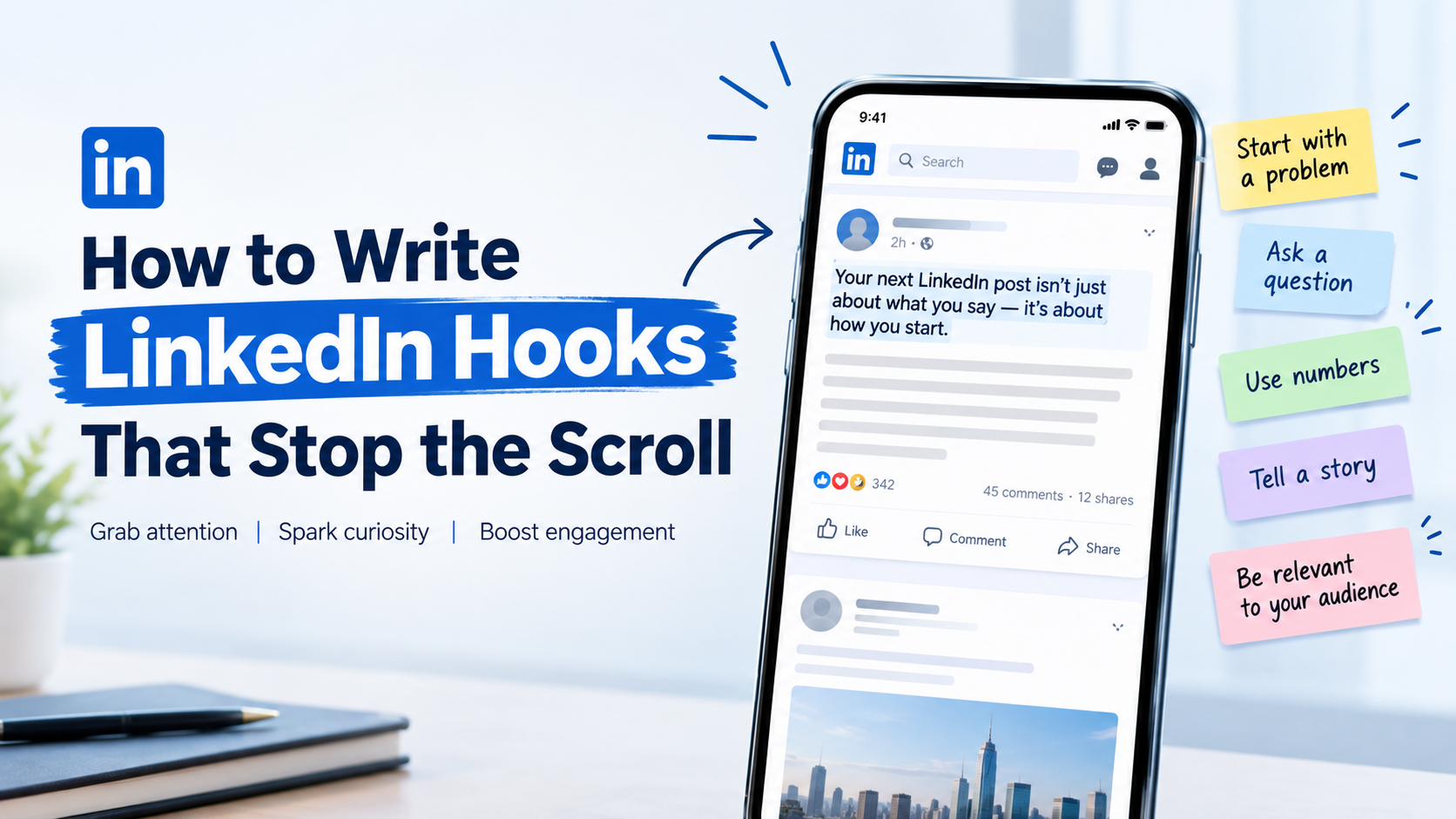
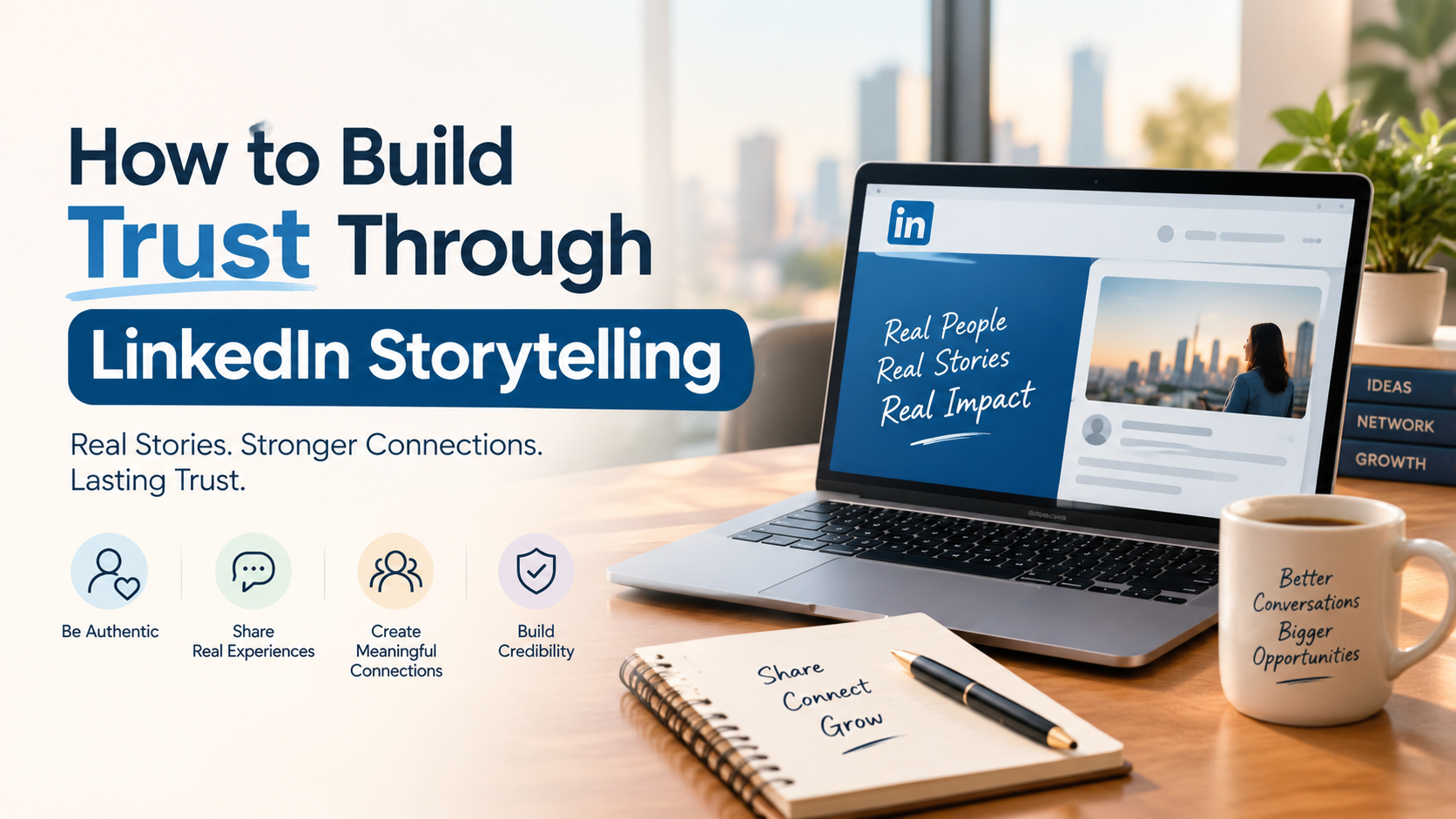
In today’s crowded digital landscape, simply posting information on LinkedIn is not enough. People connect with stories, experiences, challenges, and authentic perspectives. This is why LinkedIn storytelling has become an effective way for professionals, founders, marketers, and businesses to build trust and create meaningful connections.
A well-written LinkedIn story can transform a simple professional experience into content that people remember. Instead of only telling your audience what you do, storytelling allows you to show who you are, what you have learned, and how you think.
Why LinkedIn Storytelling Builds Trust
Trust is built when people find your content authentic, relatable, and consistent. Storytelling helps achieve this by making professional communication more human.
A story about a failed campaign, a difficult business decision, a career lesson, or a customer challenge can often create more engagement than a generic promotional post.
LinkedIn storytelling can help you:
-
Humanize your personal or business brand
-
Demonstrate expertise through real experiences
-
Create emotional connections with your audience
-
Make complex ideas easier to understand
-
Encourage meaningful conversations
-
Build credibility over time
1. Start With a Real Experience
The strongest LinkedIn stories usually come from real experiences.
Think about moments that taught you something valuable. It could be your first client meeting, a campaign that failed, an unexpected business challenge, a leadership lesson, or a mistake that changed your approach.
Instead of writing:
“Communication is important for business success.”
Tell the story behind the lesson.
For example, explain how a communication mistake affected a project and what you learned from it. The experience makes the lesson more believable.
2. Be Honest About Challenges
Professional content does not always have to highlight success.
Sharing challenges can make your LinkedIn storytelling more authentic. Discussing mistakes, setbacks, difficult decisions, or lessons from failure can demonstrate self-awareness.
However, the goal should not be to create drama. The story should provide a useful takeaway for your audience.
A simple structure is:
Challenge → Action → Result → Lesson
This makes your story easy to follow while keeping it valuable.
3. Use a Strong Opening Hook
The first few lines determine whether someone continues reading your LinkedIn post.
Instead of starting with a generic statement, create curiosity.
For example:
Weak:
“LinkedIn is a powerful platform for personal branding.”
Stronger:
“I almost lost a client because I thought I had communicated everything clearly.”
The second opening creates curiosity because readers want to know what happened next.
Good LinkedIn storytelling hooks can include:
-
A surprising result
-
A personal mistake
-
An unexpected lesson
-
A bold observation
-
A question
-
A specific moment or experience
4. Make the Story About the Reader Too
A common mistake is making LinkedIn storytelling entirely about yourself.
Your experience should ultimately provide value to your audience.
After telling your story, connect it to a broader lesson.
For example:
Your experience:
You struggled to convert LinkedIn connections into business opportunities.
Audience takeaway:
Building relationships before pitching can improve the quality of professional conversations.
This turns a personal story into useful content.
5. Show, Don't Just Tell
Instead of saying:
“Customer service is difficult.”
Show the situation:
“A customer called five minutes before closing. The team was ready to leave, but we stayed back to solve the issue.”
Specific situations make stories more memorable.
Whenever possible, include details about the situation, decision, action, or result without revealing confidential information.
6. Share Lessons From Failure
Failure stories can be particularly effective because they feel authentic.
You can write about:
-
A marketing campaign that underperformed
-
A business decision that went wrong
-
A missed opportunity
-
A communication mistake
-
A hiring lesson
-
A failed strategy
-
A professional setback
The key is to focus on what you learned and what you changed afterward.
A failure without a lesson becomes a confession. A failure with a lesson becomes valuable content.
7. Use Data to Strengthen Your Story
Stories create emotional connection, while data adds credibility.
If appropriate, support your story with measurable results.
For example:
Instead of saying:
“We improved our LinkedIn performance.”
Say:
“After changing our content strategy, our LinkedIn engagement increased by 42% over three months.”
Combining storytelling with relevant data makes your content both engaging and credible.
8. Keep Your Stories Simple
A good LinkedIn story does not need to be complicated.
Use:
-
Short paragraphs
-
Simple language
-
One central idea
-
Clear transitions
-
A strong takeaway
Avoid filling your story with unnecessary background information.
The reader should quickly understand:
What happened?
Why does it matter?
What can I learn from it?
9. End With a Meaningful Takeaway
A strong ending gives your audience something to remember.
Instead of ending with:
“That's my story. What do you think?”
Try connecting the story to a broader lesson.
For example:
“The biggest lesson wasn't that the campaign failed. It was that we had been measuring activity instead of impact.”
You can then invite your audience to share their experience.
This encourages genuine conversation rather than simply asking for engagement.
10. Stay Consistent With Your Storytelling
Trust is not created through one viral post.
It develops through consistent communication.
Share different types of stories over time:
-
Lessons from your career
-
Customer experiences
-
Industry observations
-
Behind-the-scenes moments
-
Mistakes and lessons
-
Success stories
-
Leadership experiences
-
Personal growth
Consistency helps your audience understand your expertise, values, and personality.
LinkedIn Storytelling Formula You Can Use
A simple formula for creating LinkedIn stories is:
Hook → Context → Challenge → Action → Result → Lesson → CTA
For example:
Hook:
“I made a simple mistake that cost our team an entire week.”
Context:
“We were preparing a new marketing campaign.”
Challenge:
“We moved too quickly and skipped an important review.”
Action:
“We paused the campaign and redesigned our approval process.”
Result:
“The next campaign launched without the same issue.”
Lesson:
“Speed is valuable, but the right process prevents expensive mistakes.”
CTA:
“What is one professional lesson you learned the hard way?”
Common LinkedIn Storytelling Mistakes
Avoid these mistakes when creating storytelling content:
Making Every Story Promotional
Not every story needs to sell your service. Constant promotion can reduce credibility.
Exaggerating Results
Trust is built through authenticity. Avoid unrealistic claims or inflated numbers.
Sharing Confidential Information
Never reveal sensitive client, employee, financial, or business information simply to make a story more interesting.
Having No Clear Lesson
A story should ideally leave the reader with an insight, idea, or useful takeaway.
Copying Other Creators
Study successful storytelling formats, but develop your own voice and experiences.
Final Thoughts
LinkedIn storytelling is more than a content strategy. It is a way to make professional communication more human.
When you share authentic experiences, explain the challenges behind your decisions, and provide useful lessons, your audience gets an opportunity to understand the person or business behind the profile.
You don't need a dramatic story to build trust. Sometimes, the most powerful LinkedIn stories come from ordinary professional moments—a mistake, a difficult conversation, a customer interaction, or a lesson learned.
The goal is simple: tell the truth, provide value, and give people a reason to remember your story.