
Fixing Bad Chatbots: How Businesses Can Build Smarter, More Helpful AI Chat Experiences
Introduction
Chatbots have become an important part of modern business websites, customer support systems, and digital communication strategies. From answering frequently asked questions to helping customers find products and schedule appointments, chatbots can improve customer engagement and reduce the workload on support teams. However, not every chatbot delivers a positive experience. Many businesses invest in chatbot technology only to discover that customers are frustrated by repetitive responses, irrelevant answers, confusing conversations, and the inability to resolve simple problems.
Fixing bad chatbots is no longer just a technical concern. It is an essential step toward improving customer satisfaction, strengthening brand credibility, and creating more effective digital experiences. A poorly designed chatbot can drive potential customers away, while a well-designed one can guide visitors toward the information or services they need. For businesses looking to improve their online presence, understanding why chatbots fail and how to fix them is an important part of digital transformation.
Why Do Chatbots Fail to Deliver a Good User Experience?
One of the most common reasons chatbots fail is that they are designed around business convenience rather than customer needs. Companies may introduce chatbots to reduce support costs or automate repetitive tasks without considering how customers actually interact with them. As a result, users often encounter automated responses that do not address their questions or provide a clear path toward a solution.
Another major problem is limited conversational understanding. Traditional rule-based chatbots depend on predefined keywords and decision trees. When a customer phrases a question differently from the expected format, the chatbot may fail to recognize the intent. Even AI-powered chatbots can produce inaccurate or irrelevant responses when they lack reliable information, sufficient context, or clearly defined boundaries.
Poor integration with existing business systems can also limit chatbot performance. A chatbot that cannot access current product information, customer records, order status, or service availability may provide incomplete answers. In these situations, customers are forced to repeat information or switch between multiple channels to complete a simple task.
Additionally, some businesses make the mistake of treating chatbot deployment as a one-time project. Without regular monitoring, testing, and updates, even a well-designed chatbot can become less useful as products, services, policies, and customer expectations change.
Recognizing the Warning Signs of a Bad Chatbot
Before fixing a chatbot, businesses need to identify the problems affecting its performance. One clear warning sign is repeated misunderstanding. If customers frequently rephrase the same question or receive unrelated answers, the chatbot may have difficulty identifying user intent.
Another common issue is the endless conversation loop. Customers may repeatedly receive messages such as "I didn't understand that" or be redirected to the same menu without making progress. These experiences create unnecessary friction and can make users abandon the conversation altogether.
A lack of human support is another significant weakness. Chatbots are useful for handling common questions, but they cannot always resolve complicated billing issues, sensitive complaints, unusual requests, or situations requiring human judgment. If customers cannot easily contact a support representative when automation fails, frustration can increase.
Businesses should also pay attention to low chatbot engagement, high conversation abandonment rates, repeated requests for human assistance, and poor customer feedback. These indicators can reveal whether the chatbot is genuinely helping users or simply adding another obstacle to the customer journey.
Fixing Bad Chatbots by Improving Conversational Design
The first step toward fixing bad chatbots is to make conversations simpler and more natural. Instead of forcing users to follow complicated menus, businesses should design interactions around the questions customers are most likely to ask.
A useful chatbot should understand the purpose behind a message rather than rely exclusively on exact keywords. For example, customers might ask, "Where is my package?", "Can I track my delivery?" or "When will my order arrive?" Although the wording differs, the underlying intent is similar. An effective chatbot should recognize these variations and guide users toward the appropriate information.
Clear and concise responses are equally important. Chatbots should avoid long, generic explanations when a short answer is sufficient. When a question requires several steps, the chatbot can break the process into manageable instructions and ask relevant follow-up questions.
It is also important to give users clear options when the chatbot cannot understand a request. Rather than repeating the same failure message, the system should suggest related topics, ask for clarification, or provide an alternative route to assistance. Better conversational design makes chatbot interactions feel more intuitive and reduces unnecessary effort for customers.
Improve the Quality of Chatbot Knowledge and Data
Even the most advanced AI chatbot cannot consistently provide reliable answers if its underlying information is outdated, incomplete, or inaccurate. Improving the quality of chatbot knowledge is therefore one of the most important steps in chatbot optimization.
Businesses should review the information used by their chatbots, including frequently asked questions, product descriptions, service policies, pricing details, troubleshooting instructions, and customer support documentation. Outdated information should be removed, conflicting answers should be resolved, and important topics should be covered comprehensively.
For AI-powered chatbots that use retrieval-augmented generation, or RAG, the system can retrieve relevant information from approved business documents before generating a response. This approach can improve answer relevance and help keep responses aligned with company information. However, it still requires careful document preparation, appropriate retrieval settings, and ongoing evaluation.
Businesses should also establish clear rules for uncertain situations. When the chatbot cannot find reliable information, it should acknowledge the limitation instead of inventing an answer. This is particularly important when dealing with refunds, contractual terms, financial matters, privacy policies, or other high-impact customer questions.
Regularly reviewing chatbot conversations can help businesses discover missing information and improve the knowledge base over time.
Use AI to Make Chatbots More Context-Aware
Artificial intelligence can make chatbot interactions more flexible, but simply adding an AI model does not automatically solve existing problems. Businesses must ensure that the system can understand context, recognize user intent, and maintain relevant information throughout a conversation.
For example, if a customer asks about a product and then follows up with "Does it come in another colour?", the chatbot should understand that the second question refers to the product discussed earlier. Without conversational context, the system may ask the customer to repeat the entire question or provide an unrelated response.
Context-aware chatbots can also guide users through multi-step processes, such as troubleshooting a technical issue, comparing service plans, or completing a booking. However, they should retain only the information necessary for the task and follow appropriate privacy and data-handling practices.
Businesses should select AI capabilities based on actual customer needs rather than adopting complex technology simply because it is available. A straightforward rule-based chatbot may be sufficient for a small set of predictable questions, while a more advanced AI assistant may be appropriate for complex, varied conversations.
The objective is not to make every chatbot more complicated. It is to make each chatbot more useful, reliable, and appropriate for its intended purpose.
Make Human Handoffs Seamless
One of the biggest mistakes in chatbot development is assuming that automation should handle every customer interaction. In reality, the best chatbot experiences combine automated assistance with access to human support.
When a chatbot cannot resolve an issue, it should provide a clear and convenient way to contact a representative. Depending on the business, this could involve live chat, a support ticket, an email request, or a callback option.
The handoff should preserve relevant conversation details wherever possible. Customers should not have to explain the same issue repeatedly after being transferred to a human agent. Providing a concise conversation summary and collecting essential information before the transfer can make the process faster and more efficient.
Businesses should also define situations in which a human handoff is necessary. These may include repeated misunderstandings, unresolved complaints, requests outside the chatbot's capabilities, and matters requiring specialized judgment.
A chatbot should function as a helpful first point of contact rather than a barrier between customers and the support team. Making escalation easy can protect customer trust while allowing businesses to retain the benefits of automation.
Integrate Chatbots with Business Systems
A chatbot becomes significantly more useful when it can access the right information and complete meaningful tasks. Without proper integrations, it may be limited to providing generic answers that customers could find elsewhere on the website.
Connecting chatbots with customer relationship management systems, help desks, inventory platforms, appointment scheduling tools, and order management systems can enable more personalized and practical interactions.
For example, an e-commerce chatbot integrated with an order management system may help customers check delivery progress. A service-business chatbot connected to a scheduling platform may help visitors find available appointments. A CRM-connected chatbot may capture qualified leads and pass relevant details to the sales team.
However, integrations must be implemented carefully. Businesses should establish appropriate access permissions, protect customer information, validate actions before execution, and ensure that the chatbot cannot expose information to unauthorized users.
Reliable integration also requires monitoring for failed API requests, outdated records, authentication issues, and inconsistent data. These technical problems can undermine the chatbot experience even when its conversational responses are well designed.
For businesses developing customized digital solutions, a carefully planned integration strategy can turn a basic chatbot into a useful part of the broader digital ecosystem.
Test Chatbots Before and After Deployment
Testing is essential to fixing bad chatbots and preventing the same problems from returning. Businesses should not evaluate a chatbot only by checking whether it can answer a few straightforward questions. It should be tested against realistic customer scenarios, including ambiguous questions, misspellings, follow-up messages, unexpected requests, and situations in which the correct answer is unavailable.
Testing should cover the entire customer journey. For example, a business should evaluate whether a chatbot can identify a visitor's problem, ask the right follow-up questions, provide accurate information, complete an intended task, and transfer the conversation to a human when necessary.
It is also important to test how the chatbot behaves when external systems are unavailable or when customers provide conflicting information. These scenarios help identify weaknesses before they affect real users.
After deployment, businesses should continue testing new features, reviewing conversation logs, and checking whether updates introduce unintended problems. A chatbot that performs well during initial development may require further improvements as customer behaviour and business requirements evolve.
A structured testing process makes chatbot optimization an ongoing activity rather than a one-time technical exercise.
Measure Chatbot Performance with the Right Metrics
Fixing bad chatbots requires more than subjective judgments about whether conversations sound natural. Businesses should use measurable performance indicators to determine whether changes are improving customer experiences.
Useful chatbot metrics include conversation completion rate, task success rate, customer satisfaction, escalation rate, abandonment rate, response accuracy, and the frequency of repeated questions. Each metric provides a different perspective on performance.
For example, a high conversation completion rate may appear positive, but it does not necessarily mean that customers received the correct answer. Similarly, a low human-escalation rate could indicate effective automation, or it could suggest that customers are struggling to find the option to contact support.
Businesses should therefore evaluate metrics together and connect them to actual customer outcomes. If the chatbot is designed to generate leads, companies can monitor qualified leads and conversion rates. If its primary purpose is customer service, resolution quality and customer satisfaction may be more important.
Collecting feedback after selected interactions can provide additional insights into confusing responses and unresolved issues. By combining quantitative metrics with qualitative feedback, businesses can prioritize improvements that deliver the greatest value.
Address Security, Privacy, and AI Reliability
A chatbot must not only be helpful but also safe and trustworthy. Businesses that collect customer details or connect chatbots to internal systems must consider privacy, security, and access control from the beginning.
Chatbots should collect only the information required to complete a task and clearly communicate when sensitive information is needed. Personal data should be handled according to applicable privacy requirements and the organization's data-retention policies.
AI-powered chatbots also require safeguards against inaccurate outputs, prompt injection, unauthorized data disclosure, and attempts to manipulate system behaviour. Access to internal documents and business tools should be restricted according to the user's permissions and the chatbot's intended role.
For actions with meaningful consequences, such as changing an account, issuing a refund, or modifying a booking, businesses should introduce suitable verification and confirmation steps. Important actions should also be logged so that errors can be investigated.
Clear boundaries help prevent chatbots from making unsupported promises or taking actions beyond their authority. These measures are essential for maintaining customer confidence as businesses adopt more advanced AI capabilities.
Common Mistakes to Avoid When Fixing Bad Chatbots
Businesses often make chatbot problems worse by focusing on technology before understanding the underlying issue. Replacing an existing chatbot with a more advanced AI model may not help if the knowledge base remains inaccurate or the conversation design is confusing.
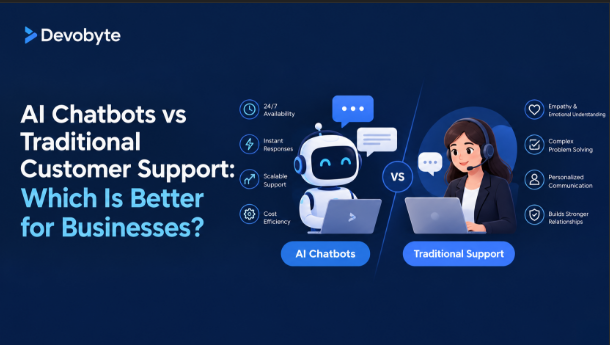
Another common mistake is trying to automate every customer interaction. Some situations require empathy, discretion, or complex problem-solving that automated systems cannot reliably provide. Allowing human intervention where necessary produces a more balanced customer experience.
Ignoring customer feedback is equally problematic. Repeated complaints about the same response, missing information, or difficult escalation should be treated as evidence of areas that need improvement.
Businesses should also avoid measuring success only through cost savings or the number of conversations handled automatically. Effective chatbot implementation should improve customer outcomes while making internal processes more efficient.
Finally, companies should not neglect maintenance. Knowledge bases, integrations, security controls, and conversational models need periodic review to remain reliable as business requirements change.
The Role of Custom Software Development in Better Chatbot Experiences
Off-the-shelf chatbot platforms can provide useful features, but they may not always fit the specific workflows, integrations, or customer journeys of a business. Companies with specialized requirements may benefit from customized chatbot solutions that align with their existing systems and operational processes.
Custom software development can help businesses create chatbot experiences tailored to their products, services, customer support requirements, and internal workflows. This may include integrating business databases, developing specialized conversational interfaces, automating repetitive tasks, and connecting chatbot interactions with CRM or help desk platforms.
A customized approach also gives businesses greater control over system architecture, permissions, data flows, and future enhancements. However, custom development should be guided by clear objectives and a realistic assessment of costs, maintenance requirements, and technical complexity.
The most effective solution is not necessarily the most sophisticated one. Businesses should identify the problems their customers experience, determine which tasks can be automated reliably, and select technologies that address those needs without introducing unnecessary complexity.
Devobyte can support businesses exploring custom software solutions by helping them think through how technology, system integration, and user-focused design can work together to improve digital experiences.
The Future of Chatbot Optimization
As AI technologies continue to develop, chatbots are likely to become more capable of handling complex requests, using business tools, and assisting customers across multiple communication channels. However, greater technical capability will not eliminate the need for good design, reliable information, careful testing, and human oversight.
Future chatbot systems will need to balance personalization with privacy, automation with human support, and conversational flexibility with predictable outcomes. Businesses that invest in these fundamentals will be better positioned to deliver consistent customer experiences.
The focus should shift from building chatbots that can simply respond to messages toward creating systems that can help users complete meaningful tasks. Whether the goal is answering support questions, qualifying leads, managing appointments, or assisting with product discovery, success depends on solving real customer problems.
Conclusion
Fixing bad chatbots requires a comprehensive approach that combines conversational design, accurate information, appropriate AI capabilities, reliable integrations, human support, security, and continuous testing. A chatbot that repeatedly misunderstands questions or prevents customers from reaching a solution can damage trust and reduce the effectiveness of a business's digital presence.
By identifying common failure points, monitoring meaningful performance metrics, and improving the chatbot based on real customer feedback, businesses can transform frustrating interactions into useful experiences. The goal is not simply to automate more conversations but to make those conversations more accurate, efficient, and helpful.
For businesses investing in digital transformation, chatbot optimization should be treated as an ongoing process. With the right strategy and technical foundation, organizations can build chatbot solutions that support customers, streamline operations, and contribute to long-term business growth. Devobyte's focus on practical software development and digital solutions aligns with this broader goal of creating technology that works around real business needs.