
Introduction
Modern marketing teams rely on multiple digital platforms to attract audiences, generate leads, track engagement, and measure campaign performance. From Google Analytics and Google Ads to social media platforms, email marketing software, and CRM systems, every tool generates valuable marketing data. However, when this information is scattered across different platforms, understanding overall marketing performance becomes difficult. This is where data warehousing plays an important role. By centralizing metrics from all marketing tools into one unified system, businesses can gain a clearer picture of their marketing activities and make more informed decisions.
What Is Data Warehousing in Marketing?
Data warehousing is the process of collecting, organizing, and storing information from multiple sources in a centralized repository. In marketing, it allows businesses to bring data from different platforms together, making it easier to analyze campaign performance, customer behaviour, lead generation, and return on investment (ROI).
Instead of switching between several dashboards to understand how campaigns are performing, marketers can access consolidated information from a single data warehouse. This creates a consistent source of information that supports better reporting, strategic planning, and performance measurement.
Why Marketing Data Is Often Scattered Across Different Tools
Businesses commonly use separate platforms for different marketing activities. Google Analytics tracks website traffic, advertising platforms measure paid campaign performance, email marketing tools monitor open rates and conversions, and CRM systems manage customer interactions and sales opportunities.
Although each platform provides useful insights, they often measure performance differently. Metrics may be stored in different formats, reporting periods may not match, and some platforms may attribute conversions differently. As a result, marketing teams can struggle to understand which channels are generating the most valuable leads and which campaigns are delivering the strongest results.
Without a centralized data system, businesses may spend more time collecting reports and reconciling numbers than actually analyzing their marketing performance.
How Data Warehousing Centralizes Marketing Metrics
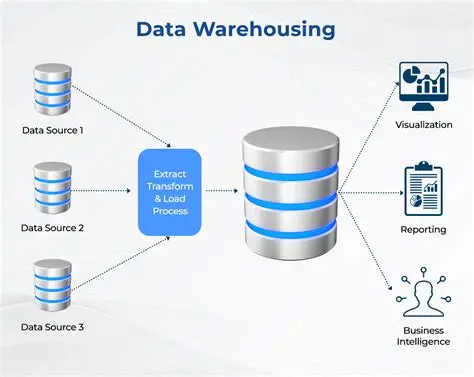
A marketing data warehouse connects information from different platforms and brings it into one organized environment. Data integration tools and automated pipelines collect information from advertising accounts, analytics platforms, CRM software, social media channels, and email marketing systems.
Once collected, the information is cleaned, transformed, and standardized before being stored in the warehouse. This process helps eliminate duplicate records, correct inconsistent formats, and align similar metrics across different sources.
For example, a business running campaigns through Google Ads, Meta Ads, and email marketing can combine campaign spending, website visits, lead generation, and conversion data in one location. Marketers can then compare channel performance without manually downloading and combining multiple reports.
The Key Benefits of Centralizing Marketing Data
One of the biggest advantages of data warehousing is improved visibility. When all marketing metrics are available in one place, businesses can understand how different channels contribute to overall performance. This makes it easier to identify successful campaigns, recognize underperforming channels, and allocate marketing budgets more effectively.
Another important benefit is more accurate reporting. Data standardization helps businesses maintain consistent definitions for important metrics such as customer acquisition cost (CAC), conversion rate, cost per lead, and return on advertising spend (ROAS). Teams can work with a shared set of numbers instead of relying on conflicting reports from individual platforms.
Centralized marketing data also saves time. Automated data pipelines reduce the need for repetitive spreadsheet work, manual data entry, and frequent report preparation. Marketing professionals can focus more on interpreting insights and improving campaign strategies.
Additionally, a data warehouse supports long-term analysis. Businesses can compare performance across different months, quarters, and years to identify trends, understand seasonal changes, and evaluate the impact of marketing strategies over time.
Important Marketing Metrics to Track in a Data Warehouse
A well-structured marketing data warehouse should include metrics that connect marketing activities with actual business outcomes. Website traffic, unique visitors, bounce rate, and engagement metrics help businesses understand how audiences interact with their digital presence.
For paid advertising, marketers should centralize impressions, clicks, advertising spend, cost per click (CPC), cost per acquisition (CPA), and ROAS. These indicators help determine whether advertising budgets are being used efficiently.
Lead generation metrics are equally important. Cost per lead, lead conversion rate, qualified leads, and customer acquisition cost provide insights into the quality and efficiency of marketing campaigns. By connecting these metrics with CRM information, businesses can also understand which marketing channels generate customers rather than simply attracting website visitors.
Email marketing performance, including delivery rates, open rates, click-through rates, and conversion rates, can provide additional insights into audience engagement. Bringing all these measurements together creates a more complete view of the customer journey.
Connecting Marketing Data with CRM and Sales Performance
Marketing performance should not be measured only through clicks, impressions, and website visits. Businesses also need to understand how marketing activities contribute to revenue and customer relationships.
Integrating CRM data into a centralized warehouse makes this possible. By connecting campaign information with lead records, sales activities, customer conversions, and revenue data, businesses can follow the journey from the first marketing interaction to the final purchase.
For example, a company may discover that one advertising channel generates a high number of leads but produces very few paying customers. Another channel may generate fewer leads but deliver a much higher conversion rate and stronger revenue.
These insights help marketing and sales teams focus on lead quality instead of relying only on lead volume. They also make it easier to evaluate marketing ROI using actual business results.
Choosing the Right Data Warehousing Tools
Selecting the right data warehousing solution depends on business size, data volume, technical requirements, and budget. Popular cloud-based platforms such as Google BigQuery, Amazon Redshift, and Snowflake provide scalable infrastructure for storing and analyzing large amounts of marketing information.
Businesses may also use integration and transformation tools to connect their marketing platforms with the warehouse. Solutions such as Fivetran, Airbyte, and dbt can help automate data movement and prepare information for analysis.
The ideal technology stack should support reliable integrations, automated updates, data quality management, security, and easy reporting. Businesses should also consider whether the platform can scale as their marketing activities and data requirements grow.
Common Challenges in Marketing Data Warehousing
Although data warehousing offers significant advantages, implementing it requires careful planning. One common challenge is inconsistent data across marketing platforms. Different tools may use different naming conventions, attribution models, and definitions for similar metrics. Without proper standardization, combining this information can produce misleading reports.
Data quality is another important concern. Duplicate records, missing information, incorrect tracking configurations, and outdated integrations can affect reporting accuracy. Businesses should establish regular data validation processes to maintain reliable information.
Privacy and security must also be considered. Marketing databases may contain customer-related information, so businesses should implement appropriate access controls, encryption, retention policies, and compliance practices.
Finally, organizations should avoid collecting unnecessary data. A successful data warehouse should be designed around clear business objectives and the metrics that genuinely support decision-making.
Best Practices for Building a Marketing Data Warehouse
Businesses should begin by identifying the marketing questions they want their data warehouse to answer. Whether the objective is to measure campaign ROI, understand customer acquisition costs, or improve lead quality, defining these goals helps determine which data sources and metrics need to be integrated.
The next step is to connect the most important marketing platforms and establish standardized metric definitions. Creating a consistent naming structure for campaigns, channels, and conversions makes reporting easier and reduces confusion.
Automation should be a priority. Regular data pipelines ensure that information is updated without depending on manual exports. Businesses should also monitor pipeline performance, validate incoming data, and document how important metrics are calculated.
Finally, centralized data should be connected to accessible reporting and business intelligence dashboards. Tools such as Looker Studio, Power BI, and Tableau can transform warehouse data into visual reports that help marketing teams understand performance quickly.
The Future of Marketing Analytics Through Data Warehousing
As businesses adopt more marketing technologies, the amount of information they generate will continue to grow. Artificial intelligence, predictive analytics, and advanced customer segmentation are making centralized data even more valuable.
A well-organized data warehouse provides a reliable foundation for advanced analytics. Businesses can use historical campaign data to identify patterns, forecast customer behaviour, estimate future marketing costs, and discover opportunities for optimization.
AI-powered analytics can also help identify unusual changes in campaign performance and highlight potential areas for improvement. However, the quality of these insights depends heavily on the quality, consistency, and accessibility of the underlying data.
Organizations that invest in structured data management will be better positioned to turn marketing information into actionable business intelligence.
Conclusion
Data warehousing is becoming an essential part of modern marketing analytics. By centralizing metrics from advertising platforms, social media channels, website analytics, email marketing tools, and CRM systems, businesses can move beyond disconnected dashboards and develop a unified understanding of their marketing performance.
From improving reporting accuracy and reducing manual work to connecting marketing campaigns with actual revenue, a centralized data warehouse supports smarter and more efficient decision-making. For businesses looking to build scalable marketing operations, investing in the right data warehousing strategy can create a strong foundation for long-term growth.
Devobyte helps businesses explore modern digital solutions, data-driven strategies, and technology that support smarter business operations. With the right approach to data integration and analytics, organizations can transform scattered marketing metrics into meaningful insights and measurable results.
To read more such articles kindly read : Devobyte