
Introduction
In today's competitive digital landscape, businesses need effective ways to increase their online visibility and attract organic traffic. Creating individual landing pages for every keyword, location, product, or service can be time-consuming and difficult to manage. This is where programmatic SEO becomes valuable. Programmatic SEO is a strategy that uses structured data, templates, and automation to create multiple optimized landing pages at scale. Instead of manually developing every page, businesses can generate relevant pages targeting specific search queries while maintaining a consistent website structure. However, scaling landing pages requires careful planning to avoid duplicate content, poor-quality pages, and search engine penalties.
What Is Programmatic SEO?
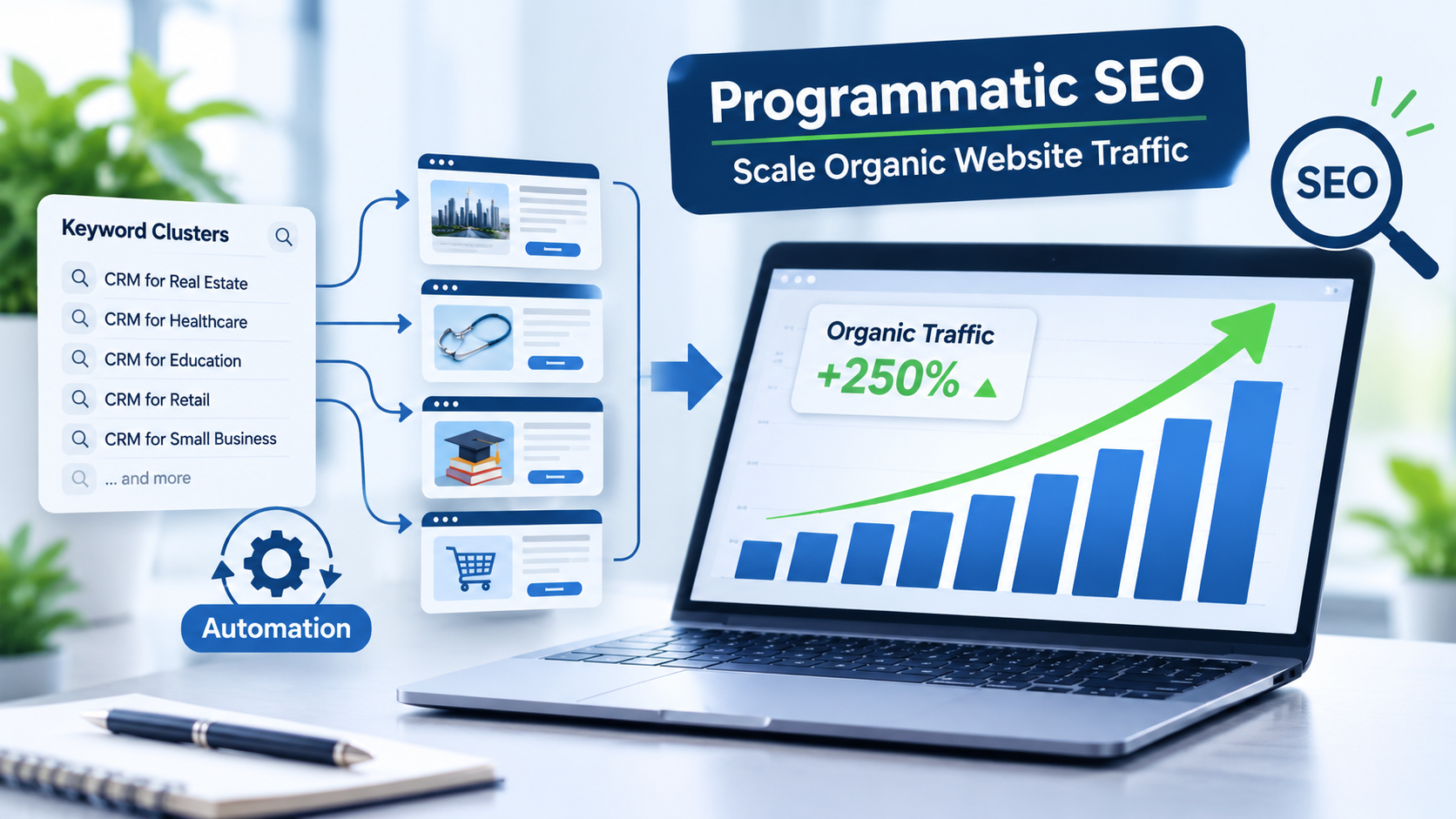
Programmatic SEO is the process of creating large numbers of search-engine-optimized web pages using structured datasets and reusable page templates. It allows businesses to target multiple related keywords and search queries without manually writing every page from scratch. For example, a travel website could create separate landing pages for hotels in different cities, while an e-commerce platform could generate pages for different product categories, brands, and locations. Each page follows a consistent structure but includes unique information relevant to its specific search intent. When implemented correctly, programmatic SEO helps businesses expand their keyword coverage, improve organic visibility, and reach audiences searching for highly specific information.
Why Businesses Are Using Programmatic SEO to Scale Landing Pages
Traditional SEO often requires significant time and resources to create individual landing pages. Programmatic SEO simplifies this process by allowing businesses to build hundreds or even thousands of pages through automation. This approach is particularly useful for companies operating in industries with large datasets, such as real estate, travel, e-commerce, education, and SaaS. By targeting long-tail keywords, businesses can reach users with specific search requirements and potentially attract more qualified traffic. Programmatic SEO also improves operational efficiency because content teams can update reusable templates and datasets instead of editing every landing page individually. However, the goal should not simply be to publish more pages but to create genuinely useful pages that satisfy user needs.
How to Build a Scalable Programmatic SEO Strategy
Building a successful programmatic SEO strategy begins with identifying keyword patterns and search opportunities. Businesses should research search queries that follow repeatable structures, such as service plus location, product plus category, or comparison-based searches. Once these patterns are identified, the next step is collecting reliable and relevant data. This information becomes the foundation of individual landing pages. Businesses should then create reusable page templates that include essential SEO elements such as title tags, meta descriptions, headings, internal links, and relevant content sections. Each generated page should contain information that directly addresses its target search query. A well-planned strategy ensures that automated page creation remains organized, relevant, and easy to maintain as the website grows.
The Importance of Unique and Valuable Content
One of the biggest challenges of programmatic SEO is maintaining content quality across hundreds or thousands of landing pages. Simply changing a city name, product title, or keyword within the same template does not necessarily create valuable content. Search engines prioritize helpful and relevant information, which means every landing page should offer something meaningful to visitors. Businesses can improve uniqueness by including location-specific insights, product specifications, customer reviews, pricing information, comparisons, and frequently asked questions where relevant. For example, a real estate website creating property pages for different cities should provide actual market information rather than repeating generic descriptions. Combining automation with useful, data-driven content helps businesses create landing pages that serve both search engines and users.
Avoiding Duplicate Content and Thin Landing Pages
Publishing large numbers of similar landing pages without meaningful differences can create SEO problems. Thin content occurs when a page provides little useful information, while duplicate content refers to substantially similar content appearing across multiple URLs. These issues can weaken a website's overall search performance and waste search engine crawling resources. To prevent these problems, businesses should evaluate whether each target keyword deserves a separate landing page. Pages should only be generated when there is sufficient unique information and a clear user need. Proper canonical tags, internal linking, structured data, and content quality checks can also help maintain a healthy website structure. If multiple pages serve nearly identical purposes, consolidating them into a stronger page may be a better approach than publishing unnecessary URLs.
Using Automation Without Losing Human Oversight
Automation is one of the main advantages of programmatic SEO, but it should not replace human judgment. Automated systems can collect data, populate templates, generate metadata, and publish landing pages efficiently. However, they may also introduce incorrect information, repetitive wording, broken links, or irrelevant content if they are not properly monitored. Businesses should establish quality assurance processes before publishing pages at scale. These processes should include checking data accuracy, reviewing generated content, testing page functionality, and verifying that every page provides a positive user experience. Human editors should review important landing pages and investigate unusual changes in search performance. A combination of automation and human supervision allows businesses to scale their SEO efforts without sacrificing reliability.
Technical SEO Considerations for Large Landing Page Websites
Technical SEO becomes increasingly important as a website expands its number of landing pages. A large website should have a clear URL structure, fast-loading pages, mobile-friendly layouts, and properly configured XML sitemaps. Internal linking should help visitors and search engine crawlers discover relevant pages without creating unnecessary navigation complexity. Businesses should also monitor crawl budget, indexation status, broken links, redirect issues, and page performance through tools such as Google Search Console and website analytics platforms. Structured data can provide additional context about eligible content types, although it does not guarantee enhanced search results. A technically sound foundation ensures that programmatic landing pages remain accessible, organized, and efficient as the website continues to grow.
Measuring the Success of Programmatic SEO
Creating landing pages is only one part of a successful programmatic SEO campaign. Businesses must regularly measure whether those pages are attracting relevant traffic and generating meaningful results. Important performance indicators include organic impressions, search rankings, click-through rates, indexed pages, engagement, and conversions. Google Search Console can help identify which pages are receiving impressions and clicks, while analytics tools can reveal how visitors interact with individual landing pages. Businesses should also identify pages that receive little traffic or fail to generate conversions. These insights can help determine whether a page needs better content, improved keyword targeting, technical corrections, or consolidation. Continuous monitoring allows businesses to improve their programmatic SEO strategy based on actual performance rather than relying entirely on automated publishing.
Common Programmatic SEO Mistakes to Avoid
Although programmatic SEO offers significant opportunities, businesses can make several mistakes when implementing it. Publishing thousands of pages without researching search intent, relying on repetitive AI-generated content, using inaccurate datasets, and neglecting technical SEO can negatively affect website performance. Another common mistake is prioritizing page quantity over usefulness. More landing pages do not automatically translate into higher rankings or increased organic traffic. Businesses should also avoid creating pages for every possible keyword variation when those searches have the same intent. Instead, they should focus on meaningful keyword groups, reliable information, and relevant landing page experiences. A quality-first approach makes it easier to maintain long-term SEO performance while reducing unnecessary website complexity.
Conclusion
Programmatic SEO provides businesses with an effective way to expand their online presence by creating scalable, data-driven landing pages. It can reduce manual content production efforts, improve long-tail keyword coverage, and help businesses reach audiences with specific search requirements. However, successful implementation requires more than automation. Unique content, accurate datasets, technical optimization, search intent analysis, and regular quality checks are essential for building a sustainable strategy. Businesses that balance automation with human oversight can scale landing pages safely while maintaining content relevance and a positive user experience. Ultimately, the real value of programmatic SEO lies not in how many pages a website can publish but in how effectively those pages solve users' problems and deliver meaningful information.
To read more such articles kindly visit : Devobyte