In the competitive digital marketplace, attracting website visitors is only half the challenge. The real objective is converting those visitors into paying customers. This is where effective landing page design principles become essential. A well-designed landing page does more than display information; it guides visitors toward a specific action, communicates business value, and builds confidence in a product or service.
Whether a business wants to generate leads, sell products, promote a service, or encourage registrations, its landing page plays an important role in achieving marketing objectives. A confusing layout, unclear messaging, slow loading speed, or weak call-to-action can cause potential customers to leave without taking action.
By applying the right design strategies, businesses can create landing pages that deliver a smooth user experience and encourage meaningful conversions.
1. Create a Clear and Compelling Headline
The headline is one of the first elements visitors notice when they arrive on a landing page. It should immediately explain what the business offers and why visitors should care.
A complicated or vague headline can create confusion and reduce engagement. Instead, businesses should use simple, benefit-focused messaging that communicates the main value proposition.
For example, instead of writing:
"Welcome to Our Digital Solutions Platform"
A stronger headline could be:
"Grow Your Business with Smarter Digital Solutions."
An effective headline should:
Communicate the primary benefit.
Address the target audience's needs.
Use simple and understandable language.
Create interest without making unrealistic promises.
A clear headline helps visitors understand the purpose of the page within seconds.
2. Keep the Design Simple and Focused
One of the most important landing page design principles is simplicity. A landing page should guide visitors toward a particular objective rather than overwhelm them with unnecessary information.
Too many design elements, promotional banners, navigation links, and competing messages can distract users from the main conversion goal.
Businesses should focus on:
Clean layouts and consistent spacing.
Limited and purposeful colour combinations.
Readable fonts and appropriate typography.
Clear content sections.
Minimal distractions.
A simple design makes information easier to understand and allows visitors to focus on the action the business wants them to take.
3. Use Strong and Visible Call-to-Action Buttons
A Call-to-Action (CTA) button encourages visitors to complete a specific action. It could be purchasing a product, requesting a quotation, downloading a resource, or booking a consultation.
An effective CTA should be easy to identify and communicate exactly what happens when someone clicks it.
Examples include:
Get Started Today
Book a Free Consultation
Buy Now
Request a Demo
Download Your Free Guide
CTA buttons should stand out from the surrounding content without disrupting the overall design.
Businesses should also position important CTAs strategically, such as near the headline, after explaining product benefits, and at the end of the page.
4. Highlight Benefits Instead of Just Features
Visitors are generally more interested in understanding how a product or service can solve their problems than reading a long list of technical features.
For example, a software company might promote features such as automated reporting, customer management, and analytics dashboards.
However, explaining their benefits makes the offer more meaningful:
Automated reporting saves time.
Customer management improves relationship building.
Analytics dashboards support better business decisions.
This approach helps potential customers understand the practical value of an offering.
A conversion-focused landing page should clearly communicate how the product or service improves the customer's experience.
5. Use High-Quality and Relevant Visuals
Visual elements make landing pages more engaging and help communicate information quickly. However, images should support the message rather than serve as unnecessary decoration.
Businesses can use:
Professional product photographs.
Service-related illustrations.
Product screenshots.
Short demonstration videos.
Relevant graphics and infographics.
For software businesses, showing an actual product dashboard can help visitors understand how the platform works.
Visuals should be optimized for website performance. Large, uncompressed images can slow down page loading and negatively affect user experience.
6. Build Trust Through Testimonials and Social Proof
Trust is a major factor influencing online purchasing decisions. Visitors may hesitate to purchase from a business if they cannot find evidence of its credibility.
Including social proof can help reduce uncertainty and build confidence.
Useful trust-building elements include:
Customer testimonials.
Verified customer reviews.
Client success stories.
Business certifications.
Recognized partnerships.
Relevant case studies.
For example, a SaaS company can highlight how its software helped a customer improve operational efficiency or manage business processes more effectively.
Testimonials should be genuine, relevant, and easy to read. Businesses should avoid publishing misleading claims or fabricated customer feedback.
7. Optimize Landing Pages for Mobile Devices
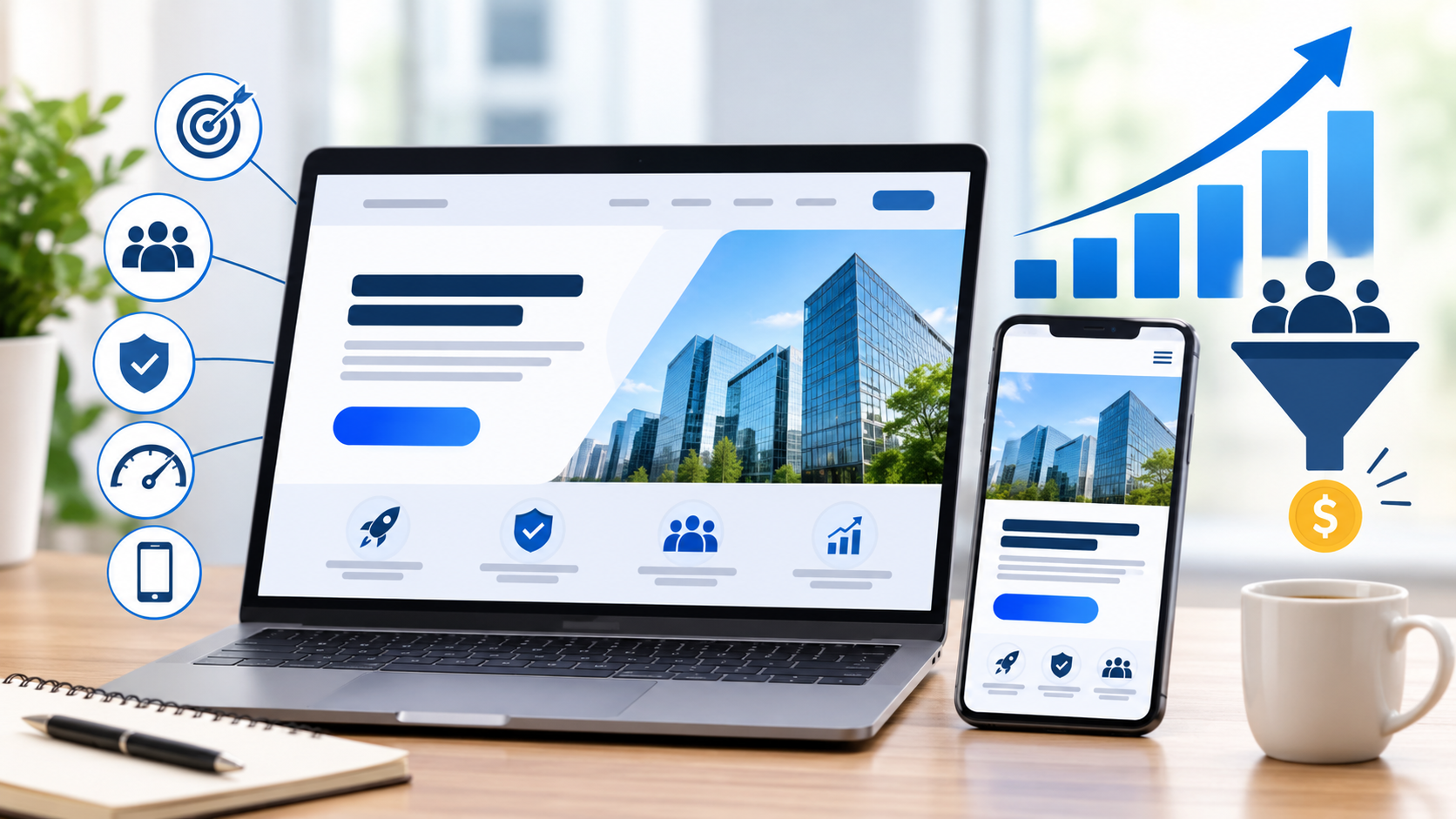
A significant amount of website traffic comes from smartphones and tablets. Therefore, mobile responsiveness is essential for an effective landing page.
A page that looks attractive on a desktop but becomes difficult to navigate on a smartphone can result in lost conversion opportunities.
Mobile-friendly landing pages should include:
Responsive layouts.
Readable text without unnecessary zooming.
Touch-friendly buttons.
Properly sized images.
Simple navigation.
Easy-to-complete forms.
Businesses should test landing pages across different screen sizes and devices to ensure a consistent experience.
8. Improve Website Loading Speed
Website speed directly influences how visitors interact with a landing page. Slow-loading pages can frustrate users and increase the likelihood that they leave before exploring the offer.
Businesses should focus on improving technical performance through:
Image compression.
Browser caching.
Optimized CSS and JavaScript.
Reduced unnecessary scripts.
Reliable web hosting.
Content Delivery Networks (CDNs).
Tools such as Google PageSpeed Insights can help identify performance issues and suggest improvements.
A faster landing page creates a smoother experience and helps visitors reach important information without unnecessary delays.
9. Keep Lead Generation Forms Short
Forms are often necessary for businesses that want to collect customer information. However, asking for too many details can discourage visitors from completing them.
A landing page designed for lead generation should request only the information required for the next step.
For example, a basic consultation form may require:
Full name.
Email address.
Phone number.
Business requirement.
Additional information can be collected later when necessary.
Clear field labels, helpful instructions, and visible privacy information can make forms easier to complete and encourage more submissions.
10. Maintain Consistent Branding
A landing page should reflect the overall identity of the business. Consistent branding helps visitors recognize the company and creates a professional impression.
Important branding elements include:
Brand colours.
Logo placement.
Typography.
Tone of voice.
Image style.
Consistent messaging.
Businesses should also ensure that the advertisement or marketing campaign leading to the landing page matches the page's headline and offer.
For example, if an advertisement promotes a free software demonstration, the landing page should clearly present that same offer rather than redirect visitors to a generic homepage.
11. Use A/B Testing to Improve Conversions
Even a professionally designed landing page may not deliver the expected results immediately. Businesses should continuously test different elements to understand what works best for their audience.
A/B testing involves creating two versions of a landing page and comparing their performance.
Elements that businesses can test include:
Headline variations.
CTA button text.
Button placement.
Images and videos.
Form length.
Page layouts.
Content structure.
For example, one version may use "Start Your Free Trial," while another uses "Get Started Today."
By measuring actual user behaviour, businesses can make informed improvements instead of relying entirely on assumptions.
12. Track Important Landing Page Performance Metrics
Monitoring performance is essential for understanding whether a landing page is achieving its objectives.
Businesses should regularly evaluate important metrics such as:
| Metric | What It Measures |
|---|---|
| Conversion Rate | Percentage of visitors who complete the desired action |
| Bounce Rate | Percentage of sessions that are not engaged |
| Click-Through Rate | Percentage of visitors who click a particular link or CTA |
| Average Engagement Time | How long visitors actively engage with the page |
| Form Submission Rate | Percentage of visitors who successfully submit a form |
| Page Loading Time | How quickly the landing page loads |
Tools such as Google Analytics 4 and Google Search Console can help businesses understand traffic patterns, engagement, and website performance.
Regular analysis helps identify areas that require improvement.
Common Landing Page Design Mistakes Businesses Should Avoid
Even small design mistakes can affect the overall performance of a landing page.
Some common mistakes include:
Unclear messaging: Visitors cannot understand what the business offers.
Too many CTAs: Multiple competing actions create confusion.
Long and complicated forms: Excessive fields discourage submissions.
Poor mobile experience: Users struggle to navigate the page on smaller screens.
Lack of trust signals: Visitors have limited reasons to trust the business.
Slow loading speed: Users leave before the content appears.
Unnecessary content: Excessive information distracts visitors from the main objective.
Avoiding these mistakes can help businesses create more effective and conversion-focused landing pages.
Conclusion
Effective landing page design is not simply about creating an attractive website. It is about understanding customer expectations, communicating value, building trust, and making the next step easy.
By following these landing page design principles, businesses can create user-friendly experiences that encourage visitors to explore their offerings and take meaningful actions.
From compelling headlines and visible CTAs to mobile responsiveness, website speed, and continuous A/B testing, every element contributes to the overall performance of a landing page.
Businesses that regularly evaluate user behaviour and improve their landing pages can build stronger digital experiences and create better opportunities for turning website visitors into paying customers.
Frequently Asked Questions (FAQs)
1. What are the most important landing page design principles?
The most important principles include clear headlines, simple layouts, compelling CTAs, mobile responsiveness, fast loading speed, trust signals, and benefit-focused messaging.
2. What makes a landing page convert visitors into customers?
A landing page converts visitors through clear communication, relevant offers, strong calls-to-action, social proof, easy navigation, and a smooth user experience.
3. How many CTAs should a landing page have?
A landing page should have one primary conversion objective. The same CTA can be repeated at relevant points throughout the page without introducing competing actions.
4. Why is mobile responsiveness important for landing pages?
Mobile responsiveness ensures that visitors can comfortably read content, navigate sections, and complete actions across smartphones and tablets.
5. How can businesses improve landing page conversion rates?
Businesses can improve conversion rates by testing headlines, simplifying forms, improving page speed, strengthening CTAs, adding genuine testimonials, and analyzing visitor behaviour.