Introduction
In 2026, website performance is no longer simply an SEO requirement or a technical metric for developers to monitor. For B2B companies, the performance of a website can directly influence how potential customers perceive a business, interact with its content, and ultimately decide whether to submit a form, request a demo, contact sales, or leave the website. This is why businesses need to look beyond traditional page speed and pay closer attention to Core Web Vitals and B2B lead conversion.
B2B buyers have become increasingly digital-first. Before speaking with a salesperson, potential customers often research companies, compare solutions, read case studies, explore product pages, and evaluate whether a provider appears trustworthy. A website that loads slowly, responds poorly to interactions, or shifts unexpectedly can create friction during this research process. Even when the underlying product or service is strong, a poor digital experience can reduce confidence and increase the likelihood that a visitor will leave before becoming a lead.
For technology companies, software providers, SaaS businesses, and other B2B organizations, optimizing Core Web Vitals is therefore about more than achieving a technical score. It is about creating a website experience that supports discovery, engagement, trust, and conversion.
What Are Core Web Vitals?
Core Web Vitals are Google's key measurements for evaluating important aspects of real-world website user experience. They focus on areas such as loading performance, responsiveness, and visual stability. While technical SEO remains an important reason to monitor these metrics, their business value extends much further.
The major Core Web Vitals include Largest Contentful Paint (LCP), Interaction to Next Paint (INP), and Cumulative Layout Shift (CLS). Each metric represents a different part of the user journey. LCP evaluates how quickly the primary content becomes visible, INP measures how responsive a website is when users interact with it, and CLS measures unexpected movement of content on the page.
For a B2B website, these measurements can affect everything from a prospect's first impression to their ability to complete an important action. If a visitor is researching an enterprise software solution and the product page takes too long to display, interactive elements respond slowly, or a form moves unexpectedly, the experience can introduce unnecessary friction.
Why Page Speed Alone Is No Longer Enough
For years, businesses treated website performance primarily as a question of loading speed. A faster website was generally considered a better website. While loading speed remains important, modern websites are much more complex than simply downloading a page quickly.
A page can appear to load relatively quickly but still provide a frustrating experience. For example, a visitor may see the main content but then experience delays when opening a navigation menu, using a calculator, selecting a product option, or submitting a contact form. Similarly, a page can load its content quickly while advertisements, images, forms, or dynamic components unexpectedly shift the layout.
This is particularly important for B2B websites because their conversion journeys often involve multiple interactive elements. Demo request forms, pricing calculators, chatbot interfaces, product configurators, comparison tools, downloadable resources, and consultation forms can all influence whether a visitor progresses toward conversion.
Core Web Vitals provide businesses with a more comprehensive framework for understanding these experiences.
LCP and the B2B Buyer's First Impression
Largest Contentful Paint, or LCP, focuses on how quickly the largest visible content element becomes available to the user. This could be a headline, image, banner, or other prominent page element.
For a B2B company, the first few seconds of a website visit can be particularly valuable. A potential customer may arrive after searching for a specific software solution or clicking a campaign advertisement. They expect the page to quickly communicate what the company offers and why it is relevant.
If the primary content takes too long to appear, the visitor may become impatient or question the quality of the website. This can be especially damaging when a company is selling technology services, custom software, cloud solutions, cybersecurity services, or enterprise platforms. Prospects may subconsciously associate a poorly performing website with a lack of technical capability.
Improving LCP can therefore help B2B businesses make their value proposition available faster. Optimized images, efficient code delivery, better hosting infrastructure, caching, content delivery networks, and reduced render-blocking resources can all contribute to a better experience.
INP and the Importance of Responsiveness
Interaction to Next Paint, or INP, measures how quickly a webpage responds visually after a user interacts with it. This makes it particularly relevant to modern B2B websites that depend on interactive experiences.
Imagine a potential customer visiting a software development company's website. They click a service category, open a navigation menu, interact with a chatbot, use a form, or request additional information. If the interface takes noticeable time to respond, the user may become frustrated.
For B2B businesses, these interactions are often directly connected to lead generation. A visitor may need to select several fields before submitting a consultation form. They may interact with a pricing tool before deciding to contact sales. They may use a chatbot to ask about implementation or product capabilities.
A responsive website reduces friction throughout these interactions. When buttons, forms, menus, and other interface elements respond quickly, users can move through the conversion journey more naturally.
CLS and Trust During the Conversion Journey
Cumulative Layout Shift, or CLS, measures unexpected movement of visible page content. While layout shifts may appear to be a minor design problem, they can have a significant impact on usability.
For example, imagine a prospect is about to click a "Request a Demo" button when an image or third-party element loads and pushes the button downward. The visitor may accidentally click something else or have to search for the button again. Repeated layout shifts can make a website feel unstable and poorly maintained.
For B2B brands, this matters because trust is a critical part of the buying process. Businesses making significant technology investments want to work with providers that demonstrate reliability and attention to detail. A visually unstable website can undermine that perception.
Maintaining stable layouts, reserving space for images and embedded content, and managing dynamically loaded components can help create a more predictable experience.
How Core Web Vitals Can Influence B2B Lead Conversion
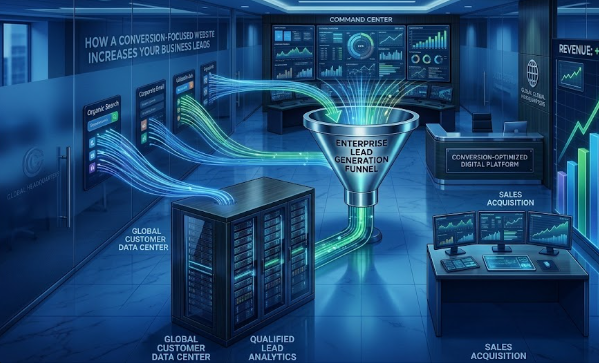
The connection between Core Web Vitals and lead generation becomes clearer when performance is viewed as part of the entire conversion funnel. A prospect typically moves through several stages before becoming a lead. They discover a company, visit the website, consume information, evaluate credibility, explore services, and eventually take an action.
Performance problems can create friction at any stage.
A slow page can increase abandonment. Poor responsiveness can discourage interaction. Layout instability can make forms difficult to use. When these problems occur repeatedly, fewer visitors may reach the conversion stage.
This does not mean that Core Web Vitals are the only factor determining whether someone becomes a lead. Content quality, pricing, brand reputation, product-market fit, messaging, calls to action, and overall user experience remain critical. However, website performance can either support these elements or undermine them.
B2B Buyers Expect Consumer-Level Digital Experiences
One of the biggest changes influencing B2B websites in 2026 is the increasing expectation for consumer-quality digital experiences.
B2B buyers are also everyday consumers. They are accustomed to fast search engines, responsive mobile applications, instant messaging, and highly optimized ecommerce websites. When they research business software or professional services, they increasingly expect a similar level of usability.
A complex purchasing process does not justify a complicated website experience.
If a potential client can instantly browse products, compare solutions, watch demonstrations, read case studies, and contact a company through a competitor's website, poor website performance can become a competitive disadvantage.
B2B businesses therefore need to think of website performance as part of their customer experience strategy rather than treating it solely as a developer responsibility.
Mobile Performance Matters for B2B Websites
Mobile optimization is another important consideration when evaluating Core Web Vitals. B2B decision-makers may not always research solutions from a desktop computer. They can discover companies through LinkedIn, search engines, email campaigns, industry publications, or other channels while using smartphones.
A website that performs well on desktop but struggles on mobile can lose valuable prospects.
Mobile devices may have slower network conditions, less processing power, and smaller screens. This makes performance optimization especially important. Businesses should test important landing pages, service pages, contact forms, and conversion journeys across a range of devices and network conditions.
A mobile visitor should be able to understand the company's offering, navigate the website, and complete an important action without unnecessary delays.
Core Web Vitals and Landing Page Performance
Landing pages are particularly important for B2B lead generation because they are often designed around specific campaigns and conversion goals.
A company might create landing pages for paid search campaigns, LinkedIn campaigns, downloadable resources, webinars, product launches, or consultation offers. These pages are designed to turn targeted traffic into leads.
If a landing page is slow or difficult to interact with, marketing spending can become less efficient. The company may successfully attract visitors but lose potential customers because the website experience fails to support conversion.
This is why marketing and development teams should collaborate when optimizing landing pages. Performance should be considered during the design and development process rather than being treated as a problem to fix after launch.
Technical SEO and Conversion Optimization Should Work Together
SEO and conversion optimization are sometimes treated as separate disciplines, but they are closely connected.
Technical SEO helps search engines crawl, understand, and evaluate websites, while conversion optimization focuses on helping visitors take meaningful actions. Core Web Vitals sit at an important intersection between these areas.
A technically optimized website can provide a stronger foundation for organic visibility while also improving the experience for users arriving from search results.
However, businesses should avoid optimizing for metrics at the expense of actual users. A website should not be stripped of useful functionality simply to improve a performance score. The objective should be to create a fast, responsive, stable, accessible, and useful experience.
The Role of Website Architecture in Core Web Vitals
Website architecture can have a major influence on performance. Large JavaScript bundles, inefficient third-party scripts, excessive plugins, unoptimized media, and poorly structured applications can all introduce performance challenges.
For B2B technology companies, this becomes especially important because websites often include advanced functionality. Product demonstrations, interactive dashboards, chat systems, animations, analytics platforms, marketing automation tools, and personalization systems can increase complexity.
The solution is not necessarily to remove these features. Instead, development teams should evaluate whether each component provides enough business value to justify its performance cost.
Efficient code splitting, lazy loading, caching, optimized assets, modern image formats, server-side improvements, and careful management of third-party scripts can help businesses maintain functionality without unnecessarily compromising performance.
Measuring Performance Against Business Outcomes
One of the most important changes companies can make in 2026 is to connect technical performance data with business outcomes.
Instead of asking only whether a website has achieved a particular Core Web Vitals score, companies should also ask whether improvements in performance are contributing to better engagement and conversion.
Teams can monitor metrics such as form completion rates, demo requests, bounce or engagement patterns, landing-page conversion rates, qualified leads, and user journeys alongside technical performance data.
This creates a more useful picture of website health. Developers can understand which technical improvements matter most to the business, while marketing teams can see how website experience influences campaign performance.
Core Web Vitals Should Be a Shared Responsibility
Website performance should not belong exclusively to the development team. Marketing teams, designers, SEO specialists, content teams, and business leaders all have a role to play.
Marketing teams may introduce third-party tracking tools and campaign scripts. Designers determine visual components and interaction patterns. Developers control implementation and technical architecture. SEO teams monitor search performance and technical issues.
When these teams work independently, performance problems can easily appear. A more collaborative approach helps businesses balance visual quality, functionality, search visibility, and speed.
How Businesses Can Improve Core Web Vitals in 2026
Improving Core Web Vitals starts with identifying the biggest performance bottlenecks. Businesses should regularly test important pages and prioritize pages that generate significant organic, paid, or referral traffic.
Image optimization is often a useful starting point. Large images can be compressed, appropriately sized, and loaded efficiently. Developers can also reduce unnecessary JavaScript, optimize CSS, improve caching, and minimize render-blocking resources.
Third-party scripts should also be reviewed regularly. Analytics platforms, chat widgets, advertising tools, heatmaps, social integrations, and other external services can contribute to page weight and responsiveness. Businesses should evaluate whether every script is still necessary.
Server infrastructure is another important consideration. Better hosting architecture, caching strategies, content delivery networks, and efficient backend systems can improve the delivery of web content.
Most importantly, optimization should be continuous. Website performance can deteriorate over time as new features, campaigns, integrations, and content are added.
Why Core Web Vitals Matter More for High-Value B2B Leads
A B2B website may not need millions of visitors to generate significant revenue. In many industries, a small number of qualified leads can represent substantial business opportunities.
This makes every meaningful visitor important.
If a company sells enterprise software, custom development services, cybersecurity solutions, or digital transformation services, losing even a small percentage of high-intent prospects can have financial consequences.
This is why website performance should be evaluated in terms of potential business impact rather than simply traffic volume. A technically small improvement that helps more qualified visitors complete a consultation form can potentially be more valuable than a large increase in low-intent traffic.
The Future of B2B Website Performance
As B2B websites become more sophisticated, performance will increasingly become part of the overall digital experience strategy. Artificial intelligence, personalization, interactive interfaces, real-time data, advanced analytics, and dynamic content can create powerful experiences, but they also introduce additional technical complexity.
Companies will need to find the right balance between functionality and performance.
The strongest B2B websites in 2026 will not simply be websites that load quickly. They will be platforms that communicate value quickly, respond naturally to user actions, remain visually stable, provide useful information, and guide prospects toward meaningful actions.
Conclusion
Core Web Vitals and B2B lead conversion should no longer be viewed as separate concepts. Website performance influences how quickly prospects understand a company's value proposition, how easily they interact with its content, and how confidently they move toward conversion.
LCP helps ensure that important content becomes available quickly. INP supports responsive interactions, while CLS helps create a stable and predictable experience. Together, these metrics provide businesses with valuable insight into how users experience their websites.
For B2B companies, however, the ultimate goal should go beyond achieving technical benchmarks. The real objective is to build a website that supports business growth.
In 2026, companies that connect technical performance with SEO, user experience, and lead-generation strategy can create stronger digital experiences and reduce unnecessary friction in the B2B buying journey. For technology businesses such as Devobyte, this means treating website performance not simply as a technical task, but as an important part of building digital experiences that attract, engage, and convert modern B2B buyers.
To read more such articles kindly visit: Devobyte