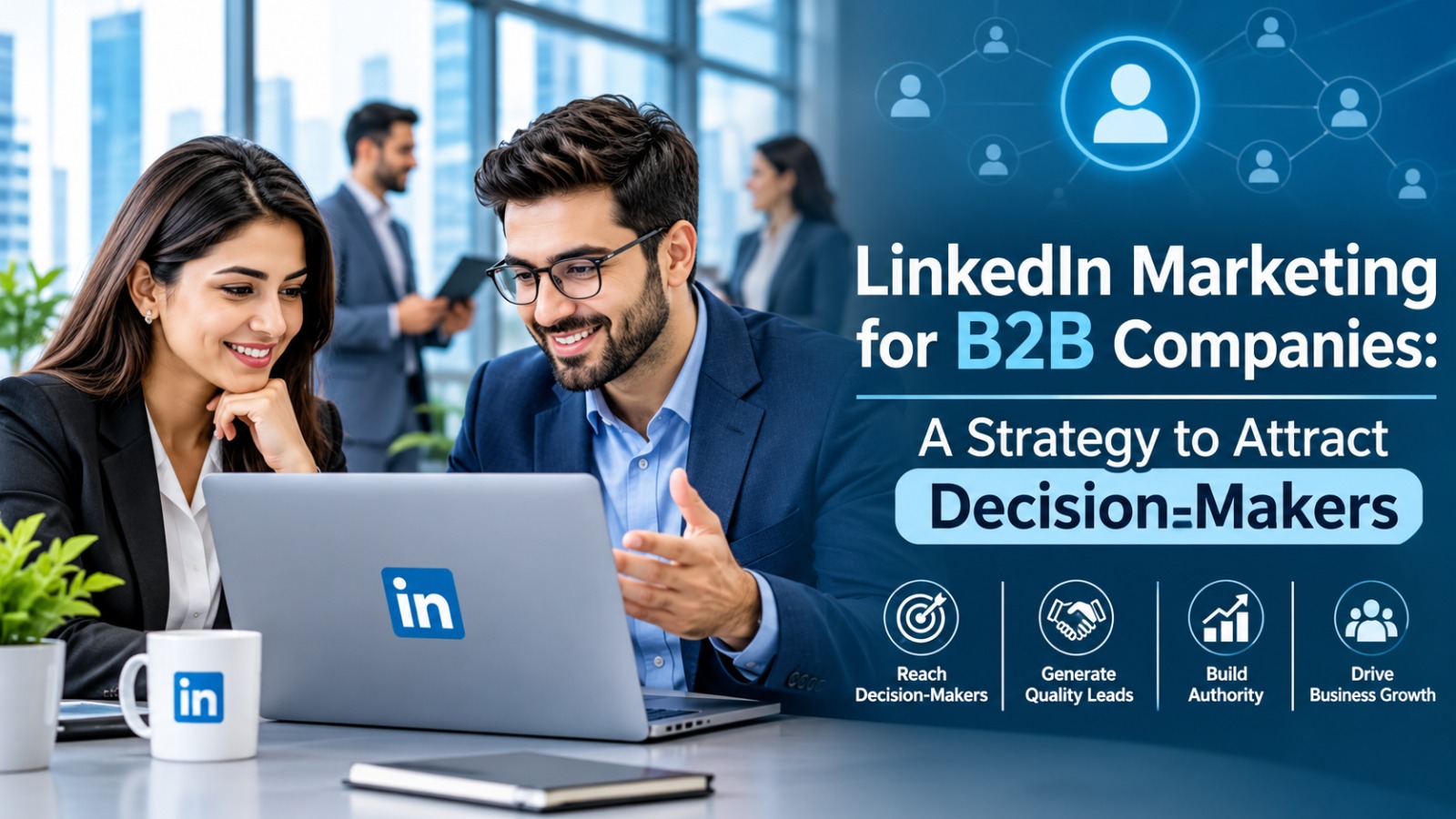
In today's competitive business environment, reaching the right audience is just as important as promoting products or services. For businesses operating in the B2B sector, connecting with decision-makers, business owners, department heads, and industry professionals plays a crucial role in generating opportunities and building long-term relationships. This is where LinkedIn Marketing for B2B Companies becomes an effective digital marketing strategy.
Unlike platforms that primarily focus on entertainment and personal interactions, LinkedIn provides a professional environment where businesses can connect with industry leaders, showcase expertise, share valuable insights, and establish credibility. It allows companies to reach professionals who influence purchasing decisions and are actively involved in business development.
However, successful LinkedIn marketing requires more than regularly publishing promotional posts. Businesses need a structured strategy that combines valuable content, professional networking, audience targeting, employee engagement, and consistent communication.
3. Why LinkedIn Marketing Matters for B2B Companies
LinkedIn has become an important platform for B2B marketing because it connects businesses with professionals based on their industries, job roles, skills, and professional interests.
Here are some major reasons why B2B companies should include LinkedIn in their marketing strategy.
1. Access to Business Decision-Makers
B2B purchasing decisions often involve multiple stakeholders, including CEOs, founders, marketing managers, procurement professionals, and department heads.
LinkedIn allows companies to identify and connect with these professionals through relevant industry searches, professional communities, and targeted advertising. Instead of reaching a broad audience, businesses can focus their marketing efforts on people who have the authority or influence to make purchasing decisions.
2. Builds Brand Authority and Credibility
Trust is an important factor in B2B relationships. Businesses are more likely to consider service providers that demonstrate industry knowledge and understand their challenges.
By sharing informative articles, industry updates, case studies, and professional insights, companies can position themselves as knowledgeable and reliable partners. Consistent communication also helps improve brand recognition among potential clients.
3. Generates Qualified Business Leads
LinkedIn provides opportunities to identify potential customers and initiate meaningful business conversations.
Companies can use professional networking, targeted campaigns, lead generation forms, and informative content to attract prospects who are genuinely interested in their offerings.
Rather than focusing only on the number of leads, businesses should prioritise lead quality and identify prospects whose requirements align with their products or services.
4. Supports Long-Term Business Relationships
B2B sales cycles can take weeks or months because purchasing decisions often require research, discussions, and approvals.
LinkedIn helps businesses maintain communication with prospects by sharing relevant updates, engaging with their content, and providing useful information throughout the decision-making process.
4. Effective LinkedIn Marketing Strategies for B2B Companies
A successful LinkedIn marketing strategy should focus on attracting the right audience, providing value, and converting professional interactions into business opportunities.
1. Optimise Your Company LinkedIn Profile
Your LinkedIn company page often creates the first impression for potential clients and business partners. An incomplete or outdated profile can reduce credibility and make it difficult for prospects to understand your services.
Businesses should ensure that their company page includes:
A professional company logo and cover image.
A clear and informative company description.
Relevant industry and service information.
An engaging company tagline.
Website and contact details.
Regular company updates and announcements.
The company description should clearly explain what the business does, whom it serves, and how its products or services solve customer problems.
2. Create Valuable and Informative Content
Content marketing is one of the most important elements of LinkedIn marketing for B2B companies.
Instead of continuously promoting products or services, businesses should publish content that educates their audience and addresses common industry challenges.
Effective LinkedIn content formats include:
Educational posts: Share practical tips, industry knowledge, and professional advice.
Industry insights: Discuss market developments, trends, and business challenges.
Case studies: Demonstrate how your company has helped clients achieve measurable results.
Infographics: Present useful information through visually engaging designs.
Company updates: Share milestones, achievements, new services, and important announcements.
Thought leadership articles: Publish expert opinions and detailed industry perspectives.
A consistent content calendar can help businesses maintain visibility and build stronger relationships with their target audience.
3. Identify and Target the Right Decision-Makers
One of the biggest advantages of LinkedIn is its professional targeting capabilities.
B2B companies should clearly define their ideal customer profile before starting outreach or advertising campaigns.
Consider factors such as:
Industry and business sector.
Company size.
Job title and designation.
Professional experience.
Geographic location.
Business requirements and challenges.
For example, a CRM software company may target business owners, sales directors, customer relationship managers, and operations heads.
Targeting relevant professionals helps businesses avoid irrelevant interactions and focus on prospects who are more likely to need their solutions.
4. Use LinkedIn Lead Generation Campaigns
LinkedIn advertising can help B2B companies reach specific professional audiences and generate business enquiries.
Businesses can use Sponsored Content, Message Ads where available, and Lead Gen Forms to promote their services and capture prospect information.
Some effective campaign ideas include:
Promoting downloadable industry reports.
Offering free consultations or product demonstrations.
Advertising webinars and professional events.
Sharing customer success stories.
Promoting software trials and service-related resources.
Lead generation forms can make it easier for interested professionals to submit their information without leaving LinkedIn.
However, businesses should ensure that their advertisements offer genuine value instead of relying entirely on promotional messaging.
5. Encourage Employee Advocacy
Employees can play an important role in increasing a company's LinkedIn visibility.
When employees share company updates, discuss industry developments, and engage with official posts, they help introduce the brand to wider professional networks.
Businesses can encourage employees to:
Share relevant company announcements.
Publish professional insights.
Participate in industry discussions.
Engage with company content.
Celebrate team achievements and milestones.
Employee advocacy can make brand communication more authentic while expanding its reach among relevant professionals.
6. Build Relationships Through Personalised Outreach
Sending generic connection requests and promotional messages to hundreds of professionals rarely creates meaningful business relationships.
Instead, B2B companies should adopt a personalised networking approach.
Before contacting a prospect, understand their professional background, company activities, and possible business requirements.
A personalised connection message should be short, professional, and relevant to the recipient.
After establishing a connection, businesses can gradually introduce useful resources, discuss industry challenges, and explore potential collaboration opportunities.
The objective should be to start a meaningful conversation rather than immediately push a sales pitch.
7. Use LinkedIn Analytics to Measure Performance
Publishing content without tracking its performance makes it difficult to understand whether a marketing strategy is working.
LinkedIn analytics helps businesses evaluate audience engagement and content performance.
Important metrics to monitor include:
Post impressions and reach.
Engagement rate.
Comments and shares.
Follower growth.
Link clicks.
Website traffic.
Lead generation and conversion rates.
Businesses should regularly analyse these metrics to identify which content formats, topics, and campaigns generate the most meaningful results.
5. Common LinkedIn Marketing Mistakes B2B Companies Should Avoid
Although LinkedIn offers several opportunities for business growth, an ineffective marketing approach can limit results. Companies should avoid the following mistakes.
1. Posting Only Promotional Content
Constantly advertising products and services can make a company page less engaging. Businesses should balance promotional posts with educational content, industry insights, and practical information.
2. Ignoring Audience Engagement
Publishing content without responding to comments or participating in discussions can reduce opportunities to build relationships. Active engagement helps businesses establish a stronger professional presence.
3. Sending Generic Connection Requests
Unpersonalised messages often fail to capture the attention of potential clients. Businesses should personalise their communication based on the recipient's role, industry, and interests.
4. Inconsistent Posting
Long gaps between posts can affect brand visibility and audience engagement. Maintaining a realistic and consistent publishing schedule is more effective than posting frequently for a short period.
5. Focusing Only on Followers
A large follower count does not necessarily translate into business growth. B2B companies should focus on reaching relevant professionals, generating qualified leads, and building meaningful business relationships.
6. Organic LinkedIn Marketing vs Paid LinkedIn Advertising
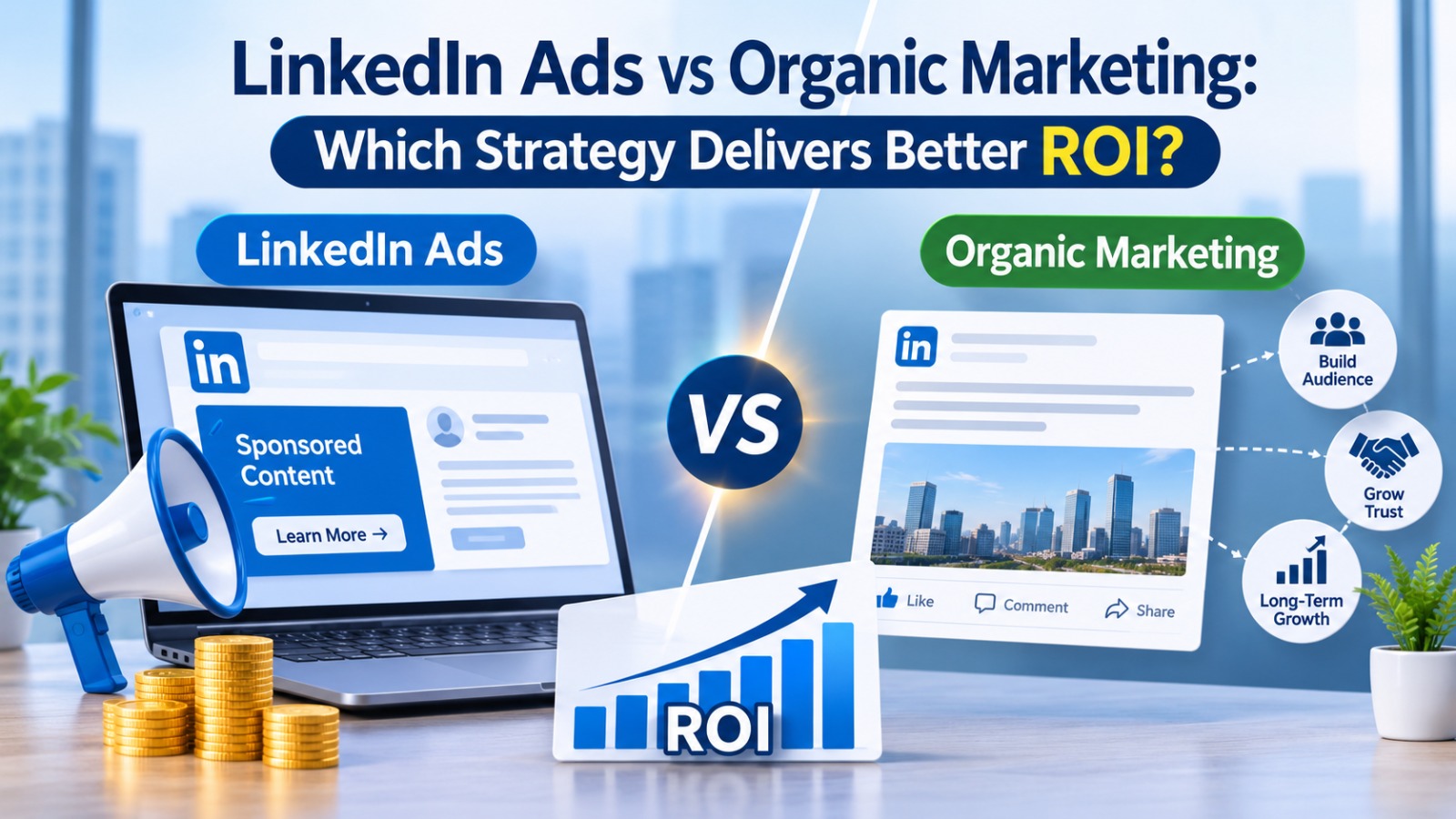
B2B companies can use both organic marketing and paid advertising to achieve their marketing objectives. Each approach serves a different purpose.
| Factor | Organic LinkedIn Marketing | Paid LinkedIn Advertising |
|---|---|---|
| Cost | No direct advertising cost | Requires an advertising budget |
| Reach | Depends on audience and engagement | Offers targeted audience reach |
| Main purpose | Build trust and authority | Generate leads and increase visibility |
| Approach | Regular content and networking | Sponsored campaigns and advertisements |
| Results | Generally develops over time | Can deliver faster campaign exposure |
| Best for | Long-term brand building | Targeted lead generation |
The most effective approach is often a combination of both. Organic marketing establishes credibility, while paid campaigns help businesses reach specific professional audiences.
7. How to Build a Practical LinkedIn Marketing Plan
A structured marketing plan helps businesses maintain consistency and measure their progress.
Here is a simple approach that B2B companies can follow:
Step 1: Define Your Marketing Goals
Determine whether your primary objective is brand awareness, website traffic, lead generation, partnership opportunities, or customer acquisition.
Step 2: Identify Your Target Audience
Define the industries, job roles, company sizes, and professional groups that are most relevant to your services.
Step 3: Develop a Content Calendar
Plan educational posts, industry insights, case studies, company updates, and thought leadership content.
Step 4: Establish a Networking Routine
Connect with relevant professionals, participate in discussions, and build relationships with potential clients.
Step 5: Launch Targeted Campaigns
Use LinkedIn advertising when appropriate to promote valuable resources, consultations, events, and business solutions.
Step 6: Track and Improve Performance
Review analytics regularly and refine your strategy based on engagement, lead quality, and business outcomes.
8. The Role of LinkedIn Marketing in Long-Term B2B Growth
LinkedIn marketing should not be viewed as a short-term promotional activity. It is a long-term business development strategy that helps companies establish industry credibility, build professional networks, and maintain relationships with potential customers.
For B2B organisations, purchasing decisions are often based on trust, expertise, reliability, and the ability to deliver business value. Consistent LinkedIn communication allows businesses to demonstrate these qualities before a prospect even initiates a sales conversation.
Companies that combine informative content, targeted networking, personalised communication, and performance analysis can create a stronger digital presence and develop a more effective lead generation process.
9. Conclusion
LinkedIn Marketing for B2B Companies offers an effective way to connect with decision-makers, improve brand visibility, generate qualified leads, and establish lasting professional relationships.
However, achieving meaningful results requires a well-planned approach. Businesses should focus on understanding their target audience, publishing valuable content, engaging with relevant professionals, and measuring their marketing performance.
Rather than treating LinkedIn as just another social media platform, B2B companies should use it as a strategic channel for relationship building, brand positioning, and sustainable business growth.
With consistency and the right marketing strategy, LinkedIn can become an important part of a company's overall digital marketing and customer acquisition efforts.
10. Frequently Asked Questions (FAQs)
Q1. Why is LinkedIn important for B2B marketing?
LinkedIn is important for B2B marketing because it allows companies to connect with business owners, executives, decision-makers, and industry professionals. It also supports brand building, professional networking, and lead generation.
Q2. How can B2B companies generate leads through LinkedIn?
B2B companies can generate leads by publishing informative content, connecting with relevant professionals, using personalised outreach, running targeted advertising campaigns, and offering valuable resources such as consultations and industry reports.
Q3. How often should a B2B company post on LinkedIn?
A business can start with three to four quality posts per week and adjust its schedule based on audience engagement and available resources. Consistency and content relevance are more important than posting excessively.
Q4. Is LinkedIn advertising effective for B2B companies?
Yes. LinkedIn advertising can help B2B companies reach specific professional audiences based on factors such as job title, industry, company size, and location. Its effectiveness depends on campaign objectives, targeting, creative quality, and budget.
Q5. What type of content works best for B2B marketing on LinkedIn?
Educational posts, industry insights, case studies, infographics, thought leadership articles, and customer success stories are useful content formats for attracting and engaging B2B audiences.
Q6. How can companies measure LinkedIn marketing success?
Companies can measure performance through impressions, engagement, follower growth, website clicks, qualified leads, conversion rates, and the overall business opportunities generated through LinkedIn.
11. Suggested Call to Action
Want to strengthen your B2B digital marketing strategy? Focus on building a professional LinkedIn presence, connecting with the right decision-makers, and creating content that turns industry knowledge into business opportunities.
Start building meaningful professional connections and make LinkedIn an important part of your business growth strategy.