Technology plays an important role in how businesses operate, manage customers and deliver services. However, many organisations still depend on outdated applications and legacy systems that were developed years or even decades ago. While these systems may continue to support daily operations, they can gradually become difficult to maintain, expensive to manage and incompatible with modern business requirements. This is where Legacy Software Modernisation becomes essential.
As businesses expand and customer expectations change, software infrastructure must evolve to support new requirements. Older applications may struggle with increasing workloads, integration challenges, security vulnerabilities and limited scalability. Upgrading these systems is not simply about adopting newer technology; it is about creating a reliable digital foundation that supports long-term business growth.
In this article, we explore what legacy software modernisation means, why it matters, when businesses should consider upgrading and how organisations can approach the modernisation process successfully.
What Is Legacy Software Modernisation?
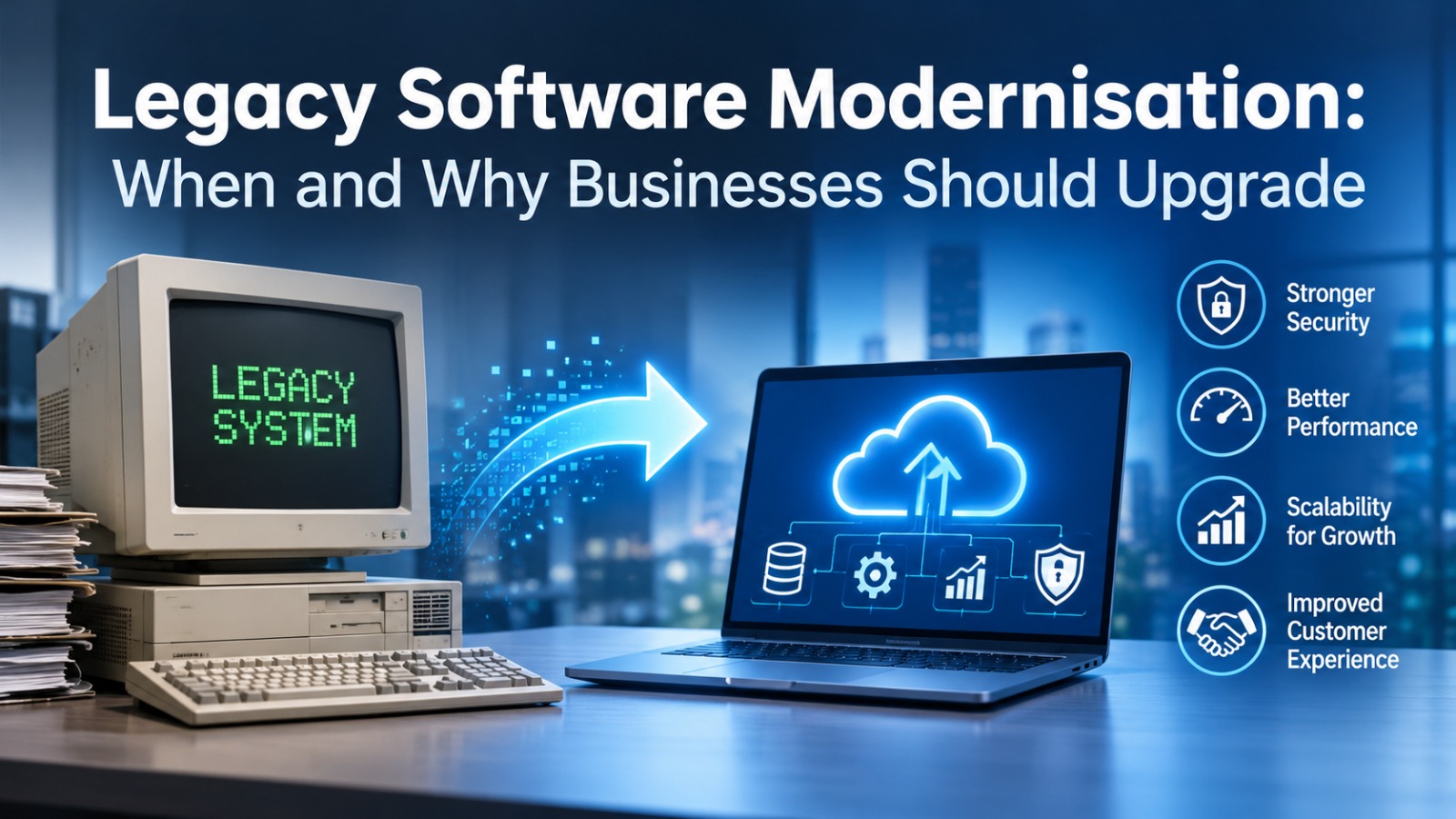
Legacy software modernisation is the process of upgrading, improving or replacing outdated software applications and technology infrastructure to meet current business and technical requirements.
Legacy systems are often built using older programming languages, outdated frameworks, traditional databases or infrastructure that may no longer receive regular support. Although these applications might still perform essential functions, maintaining them can become increasingly challenging as technology advances.
Modernisation does not always require completely replacing an existing system. Depending on business requirements, organisations can improve specific components, migrate applications to cloud infrastructure, update programming frameworks or rebuild applications using modern technologies.
For example, a company using an outdated customer management application might modernise it by introducing cloud-based infrastructure, improving its user interface, integrating automation features and strengthening data security.
The objective is to ensure that business software remains efficient, secure, adaptable and capable of supporting future operational needs.
Why Do Businesses Need Legacy Software Modernisation?
Many organisations delay upgrading older systems because they are familiar with their existing infrastructure. However, continuing to depend on outdated software can create operational challenges that affect productivity and business performance.
Here are some important reasons why businesses should consider modernisation.
1. Improving Software Performance and Operational Efficiency
Older applications may not be designed to handle modern workloads, large datasets or increasing numbers of users. As a result, businesses can experience slower processing speeds, system interruptions and inefficient workflows.
These performance issues can affect employees, customers and overall productivity.
Modern software solutions use improved architectures, updated frameworks and optimised databases to support faster processing and more efficient operations.
For example, an organisation handling customer requests through an outdated application may experience delays when accessing records or generating reports. Modernising the application can improve response times, streamline workflows and reduce unnecessary manual activities.
2. Strengthening Security and Data Protection
Cybersecurity is one of the biggest reasons businesses should prioritise legacy software modernisation.
Older software may contain security vulnerabilities because it no longer receives regular updates or security patches. Outdated frameworks and unsupported operating systems can also increase exposure to cyberattacks.
Modernising legacy applications allows organisations to introduce updated security standards, stronger authentication systems, improved access controls and modern encryption practices.
Businesses can also implement regular security monitoring, vulnerability assessments and automated backup systems.
This is particularly important for organisations that manage confidential customer information, financial records and sensitive business data.
3. Reducing Long-Term Maintenance Costs
Maintaining legacy software can become expensive over time. Organisations may need specialised developers who understand outdated programming languages or systems that are no longer widely supported.
Finding technical experts, resolving compatibility problems and maintaining ageing infrastructure can increase operational expenses.
Additionally, older systems may require frequent manual intervention and costly troubleshooting.
Legacy software modernisation helps businesses reduce these challenges by adopting technologies that are easier to maintain, widely supported and more compatible with modern development environments.
Although modernisation requires an initial investment, it can reduce long-term maintenance expenses and improve the overall value of technology infrastructure.
4. Supporting Business Growth and Scalability
As organisations grow, their software requirements change. A system that works effectively for a small business may struggle when the organisation expands its workforce, customer base or transaction volume.
Legacy applications may have limited scalability because of their underlying architecture.
Modern software systems can support changing workloads through cloud infrastructure, modular application design and scalable databases.
For example, an e-commerce business experiencing rapid growth may need to manage thousands of additional customer interactions and transactions. A modernised platform can provide the flexibility required to support increasing demand without repeatedly rebuilding the entire system.
5. Enabling Integration With Modern Technologies
Businesses increasingly depend on multiple digital tools, including CRM platforms, ERP systems, payment gateways, analytics solutions and marketing automation software.
However, outdated applications may not support modern APIs or integration standards, making it difficult to connect different business systems.
Modernisation helps organisations improve interoperability and create connected technology environments.
For example, integrating a modern CRM platform with accounting software and customer support tools can help businesses manage customer information, track transactions and coordinate internal activities more effectively.
Better integration also reduces data duplication and manual data entry.
6. Improving Customer Experience
Customers expect businesses to provide fast, reliable and convenient digital experiences.
Outdated applications can create slow websites, complicated interfaces, delayed transactions and inconsistent service delivery.
Modern software can improve the customer experience through responsive interfaces, faster processing, personalised services and better accessibility.
For businesses operating online platforms, modernisation can directly influence customer satisfaction, engagement and retention.
When Should Businesses Upgrade Their Legacy Software?
Not every older application needs immediate replacement. Some legacy systems continue to perform reliably and support important business processes.
However, certain warning signs indicate that modernisation should become a priority.
1. Frequent System Failures and Downtime
If applications regularly crash, experience unexpected downtime or require repeated technical fixes, the underlying infrastructure may no longer be reliable.
Frequent disruptions can affect employee productivity, customer satisfaction and revenue generation.
Businesses should evaluate whether maintaining the existing application is more expensive than upgrading it.
2. Increasing Maintenance Expenses
When organisations spend more money maintaining outdated applications than improving their technology infrastructure, it may be time to consider modernisation.
Rising support costs, specialised development requirements and recurring technical problems are important indicators.
3. Compatibility Problems
Legacy applications may not work properly with newer operating systems, devices, browsers or third-party platforms.
If employees struggle to connect different business tools or access important applications, the existing infrastructure may be limiting operational efficiency.
4. Security and Compliance Risks
Unsupported software, outdated security protocols and unpatched vulnerabilities can expose businesses to significant risks.
Organisations handling sensitive information should regularly evaluate whether their existing applications meet current security and regulatory requirements.
5. Limited Business Scalability
If an application cannot support additional users, increasing transactions or new business operations, it may prevent organisations from expanding efficiently.
Businesses should consider upgrading when software limitations begin affecting their growth plans.
6. Difficulty Finding Technical Support
Some legacy applications depend on outdated programming languages or technologies that have become difficult to maintain.
When experienced developers and technical support become increasingly difficult to find, organisations may face operational risks.
Modernisation can help reduce dependency on specialised legacy expertise.
Different Approaches to Legacy Software Modernisation
Legacy software modernisation is not a one-size-fits-all process. Businesses should choose an approach based on their technical infrastructure, operational requirements, budget and long-term objectives.
The following approaches are commonly used.
1. Rehosting
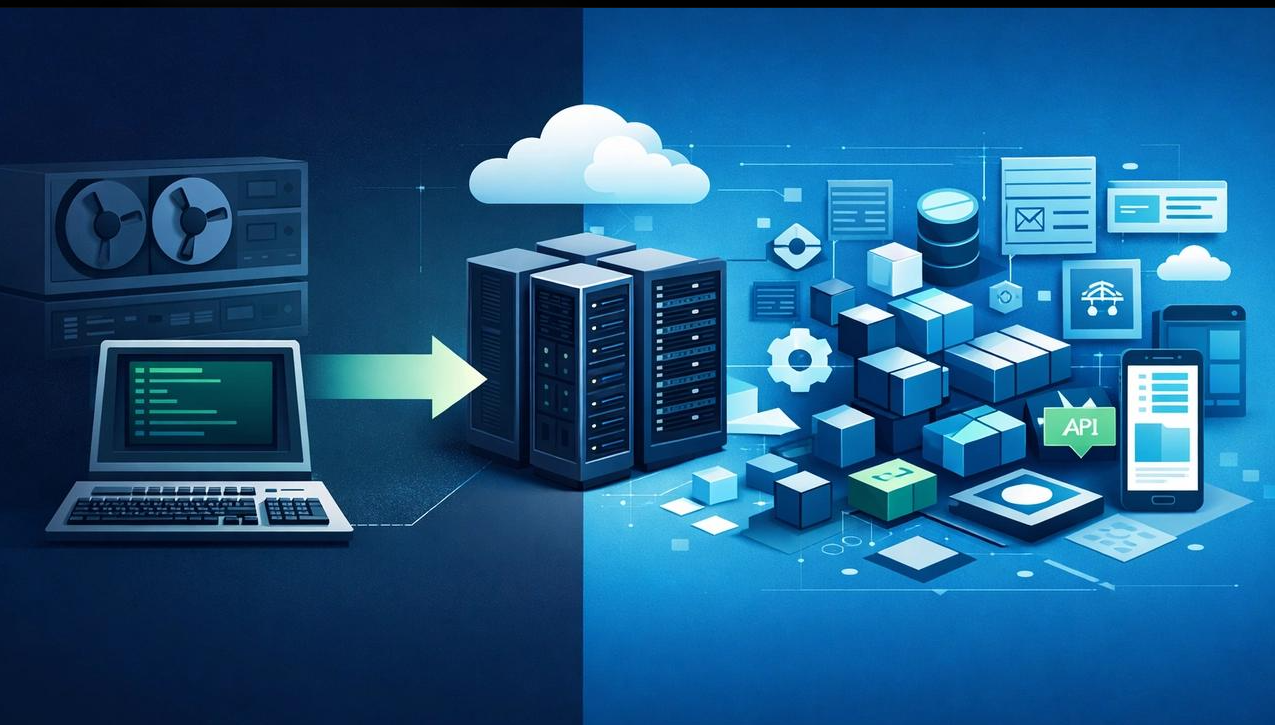
Rehosting involves moving an existing application from traditional infrastructure to a different hosting environment, often cloud infrastructure, without making significant changes to its underlying code.
This approach can help businesses reduce dependence on physical servers and improve infrastructure flexibility.
It is generally suitable when an application works reliably but the organisation wants to modernise its hosting environment.
2. Refactoring
Refactoring involves modifying the internal structure of existing software without changing its primary functionality.
Developers improve code quality, simplify complex components and optimise application performance.
This approach can make applications easier to maintain and prepare them for future improvements.
3. Replatforming
Replatforming involves moving an application to a modern technology platform while making limited changes to its architecture or code.
For example, a business might migrate an application to a cloud-based database or updated application hosting environment.
This can improve performance and infrastructure management without requiring a complete rebuild.
4. Rebuilding
Rebuilding involves developing a new application using modern technologies while retaining the essential business requirements and functionality of the existing system.
This approach is suitable when the original application has significant technical limitations or its architecture cannot support future business requirements.
Although rebuilding requires considerable planning and investment, it can provide greater flexibility and long-term scalability.
5. Replacing
Sometimes, maintaining or upgrading an existing application is no longer practical.
In such cases, businesses may replace the legacy system with an entirely new software solution.
For example, an organisation might replace an outdated internal customer management application with a modern CRM platform that offers automation, reporting, integration and cloud accessibility.
Key Challenges in Legacy Software Modernisation
Although modernisation offers several benefits, the process can involve technical and operational challenges.
Data Migration: Moving large amounts of information from legacy databases to modern platforms requires careful planning. Businesses must maintain data accuracy, consistency and integrity throughout the process.
High Initial Investment: Modernising complex applications can require significant financial resources, particularly when rebuilding systems or migrating large technology infrastructures.
Business Disruption: Poorly planned upgrades can interrupt regular operations. Organisations should use phased implementation and proper testing to minimise downtime.
Employee Resistance: Employees who are familiar with existing applications may find new systems difficult to adopt. Proper training and change management can improve acceptance.
Integration Complexity: Connecting modern applications with older systems can require additional development and technical adjustments.
Understanding these challenges before beginning a project helps organisations prepare realistic budgets, timelines and implementation strategies.
How to Plan a Successful Legacy Software Modernisation Strategy
A structured approach can help businesses reduce risks and achieve better results from modernisation projects.
Step 1: Evaluate Existing Software Infrastructure
Start by identifying all applications, databases, servers and technology components currently used by the organisation.
Assess their performance, maintenance requirements, security standards and compatibility with modern technologies.
Step 2: Identify Business Requirements
Modernisation should support clear business objectives rather than simply introduce new technology.
Organisations should identify what they want to achieve, whether it is reducing operational costs, improving application performance, strengthening security or supporting expansion.
Step 3: Select the Right Modernisation Approach
Choose between rehosting, refactoring, replatforming, rebuilding or replacing based on the application's technical condition and business importance.
Not every system requires a complete replacement.
Step 4: Create a Data Migration and Security Plan
Before moving information, businesses should identify critical datasets, establish backup procedures and test data migration processes.
Security controls should be implemented throughout the modernisation project.
Step 5: Test Before Full Deployment
Testing is essential to ensure that modernised applications work as expected.
Businesses should evaluate performance, security, functionality, compatibility and user experience before moving to full production.
Step 6: Train Employees and Monitor Performance
Employees should receive appropriate training to use updated applications effectively.
After deployment, organisations should continuously monitor system performance, resolve issues and make improvements based on operational feedback.
The Role of Cloud Computing, AI and Automation in Modernisation
Modern technologies are changing how organisations approach legacy software modernisation.
Cloud computing allows businesses to move applications and infrastructure to flexible environments that can support changing workloads. It can also reduce dependence on traditional physical servers and simplify infrastructure management.
Artificial intelligence can support modernisation through code analysis, automated testing, documentation assistance and identifying potential software vulnerabilities. However, AI-generated code and recommendations still require technical review and validation.
Automation can reduce repetitive operational tasks, improve workflow efficiency and minimise manual errors.
Together, these technologies allow businesses to create more adaptable software environments that support innovation and digital transformation.
Is Legacy Software Modernisation Worth the Investment?
For many organisations, modernisation can deliver long-term business value by improving reliability, reducing maintenance challenges and supporting future expansion.
However, the financial benefits depend on the condition of the existing system, the chosen modernisation strategy and the organisation's business priorities.
Businesses should evaluate the total cost of ownership rather than considering only the initial development or migration expenses.
Important factors include infrastructure costs, software maintenance, security risks, employee productivity, system downtime and future scalability.
A carefully planned modernisation project can help organisations build a stronger technology foundation while avoiding unnecessary replacement expenses.
Conclusion
Legacy software modernisation is becoming an important part of business technology strategy. As digital requirements evolve, organisations must ensure that their applications remain secure, efficient, scalable and compatible with modern business operations.
Continuing to depend on outdated systems can increase maintenance costs, create security challenges and restrict business growth. By evaluating existing infrastructure and selecting the right modernisation approach, businesses can improve operational performance and prepare for future technological changes.
The right time to upgrade is when existing software begins limiting efficiency, security or business opportunities. Rather than waiting for critical system failures, organisations should adopt a proactive approach to modernisation and invest in technology that supports long-term growth.
3. Frequently Asked Questions (FAQs)
1. What is legacy software modernisation?
Legacy software modernisation is the process of upgrading, improving or replacing outdated applications and technology infrastructure to meet current business requirements.
2. Why is legacy software modernisation important?
It helps businesses improve software performance, strengthen security, reduce maintenance expenses, support scalability and integrate modern technologies.
3. When should a business upgrade its legacy software?
Businesses should consider upgrading when applications experience frequent failures, increasing maintenance costs, security vulnerabilities, compatibility problems or limitations in supporting business growth.
4. Does legacy software modernisation always require replacing the existing system?
No. Modernisation can involve rehosting, refactoring, replatforming or rebuilding specific components. Complete replacement is only necessary when upgrading the existing system is no longer practical.
5. How does cloud computing support software modernisation?
Cloud computing provides flexible infrastructure, scalable resources and improved deployment options that can help businesses modernise application hosting and infrastructure management.
6. What are the biggest challenges of legacy software modernisation?
Common challenges include data migration, high initial costs, integration complexity, security considerations, business disruption and employee adaptation.
7. How long does legacy software modernisation take?
The timeline depends on application complexity, data volume, infrastructure requirements and the chosen modernisation approach. Smaller upgrades may take weeks, while large enterprise transformations can take several months or longer.